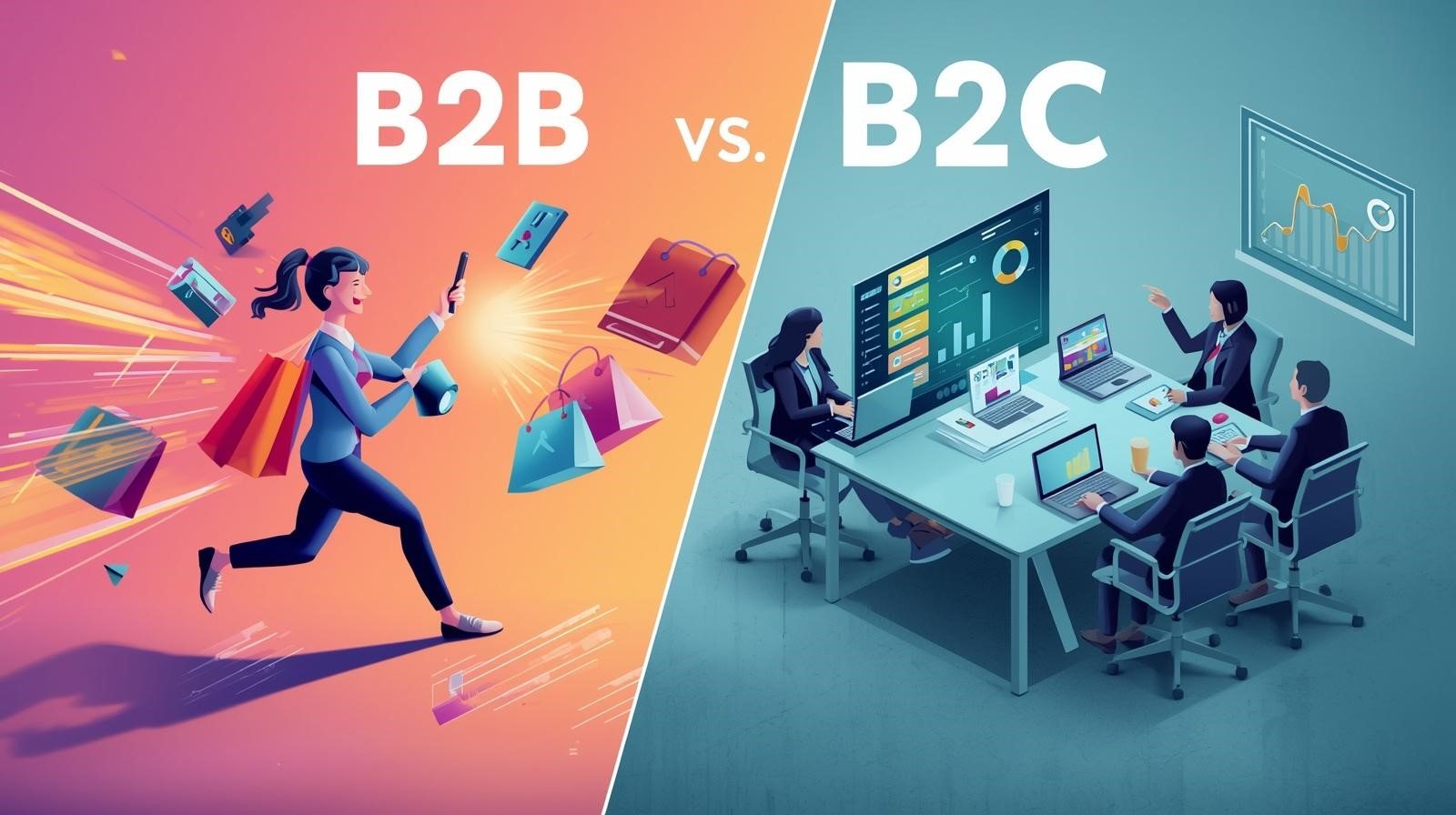
Marketing is often oversimplified as “finding customers and selling products.” While that is technically true, the methodology changes entirely depending on who sits on the other side of the screen. A person buying a $100 pair of sneakers (B2C) follows a psychological path that is worlds apart from a procurement officer purchasing a $50,000 enterprise software subscription (B2B).
If you apply a B2C mindset to a B2B audience, you will burn through your ad budget with nothing to show but “vanity metrics.” Conversely, treating B2C customers with the formal rigidity of a B2B campaign will lead to high bounce rates and zero emotional connection.
At Code Nest, we see many businesses struggle to scale because they are using the wrong playbook. To succeed, you must understand why your strategy needs to shift based on the nature of the transaction.
The Core Difference: Logic vs. Emotion
The most significant shift between these two worlds is the driver behind the purchase.
In B2C (Business to Consumer), marketing is often fueled by emotion, desire, and immediate gratification. The goal is to make the consumer feel something. Whether it’s the status of a luxury watch or the convenience of a meal delivery app, the decision is usually made by a single individual, often in a matter of minutes.
In B2B (Business to Business), the driver is logic, ROI, and risk mitigation. A B2B buyer isn’t just buying a product; they are making a business decision that affects their bottom line, their workflow, and potentially their job security. Because of this, a b2b digital marketing strategy must prioritize education and trust over flashy slogans.
The Complexity of the Decision-Making Unit
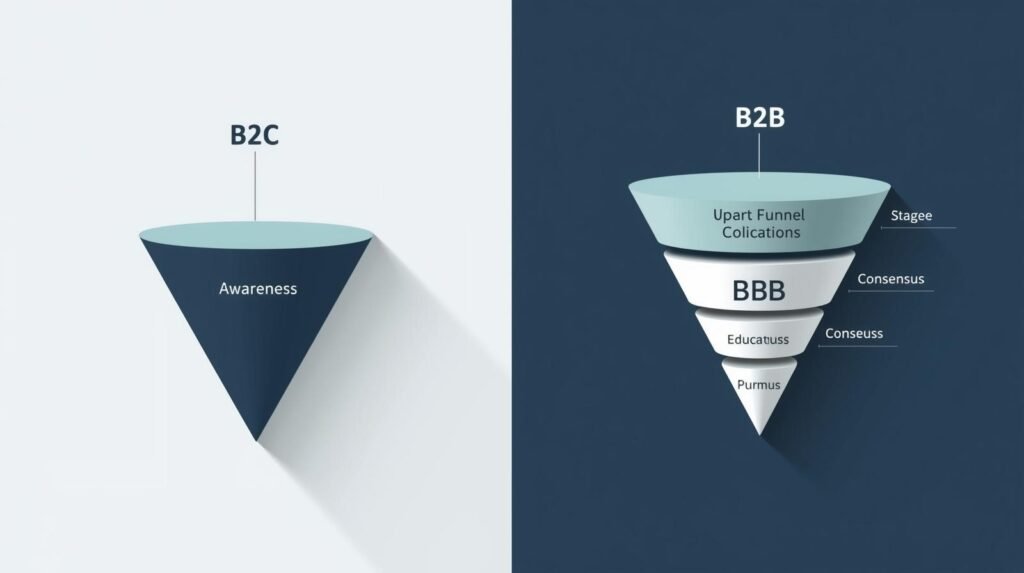
In B2C, you are marketing to one person. If they like the ad and the price is right, they click “buy.”
In B2B, you are marketing to a “Decision-Making Unit” (DMU). On average, a B2B sale involves six to ten stakeholders. Your marketing content needs to speak to all of them:
- The User: Wants to know if the tool is easy to use.
- The Manager: Wants to know if it will increase team productivity.
- The IT Director: Wants to know about security and integration.
- The CFO: Wants to know about the long-term return on investment.
Your digital strategy must provide specific content for each of these personas. A single Facebook ad won’t cut it; you need a multi-touch approach that guides these different players through a longer journey.
Social Media Marketing (SMM): Choosing the Right Stage

Social media is a powerful tool for both sectors, but the execution is vastly different.
B2C SMM: Engagement and Trends
For B2C brands, platforms like Instagram, TikTok, and Facebook are the primary battlegrounds. The strategy here revolves around high-frequency posting, leveraging viral trends, and utilizing influencer partnerships. The content should be visually stunning and shareable. The goal is to stay “top of mind” so that when the consumer is ready to buy, your brand is the first they think of.
B2B SMM: Authority and Thought Leadership
For B2B, LinkedIn is the undisputed leader. Here, the focus shifts from “likes” to “authority.” A successful B2B social strategy involves sharing whitepapers, industry insights, and case studies. You aren’t trying to entertain; you are trying to prove that your agency or company is a subject matter expert.
At Code Nest, we help B2B clients develop “Thought Leadership” profiles for their executives. When a CEO shares a deep dive into industry trends, it builds more trust than any traditional advertisement ever could.
PPC and Paid Ads: Volume vs. Value
When it comes to Paid Search (PPC) and Social Ads, the metrics for success change.
B2C PPC focuses on high volume and low Cost-Per-Acquisition (CPA). You want to drive as many people as possible to a product page. The keywords are often broad (“best running shoes”) and the ads focus on discounts, limited-time offers, or free shipping.
B2B PPC is a different game. The search volume for B2B keywords is often much lower, and the Cost-Per-Click (CPC) can be significantly higher. However, a single lead can be worth thousands of dollars. Therefore, your ads should target specific, “long-tail” keywords that indicate high intent, such as “enterprise CRM for manufacturing.” Instead of sending them to a shop, B2B ads usually lead to a high-value resource, like a free audit or an industry report, in exchange for their contact information.
Content Strategy: Entertainment vs. Education
Content is the bridge between a stranger and a customer.
For B2C, content should be fast-paced and snackable. Think 15-second videos, user-generated content, and lifestyle photography. It’s about fitting into the consumer’s daily life and providing a moment of value or entertainment.
For B2B, content is the currency of trust. You need deep-form content:
- Case Studies: Real-world proof that your solution works.
- Whitepapers: Deep dives into technical problems.
- Webinars: Direct interaction with potential leads.
- Comparison Guides: Helping the buyer understand why you are better than the competition.
B2B buyers are researchers. They will read five blog posts and download two guides before they ever pick up the phone to call your sales team.
The Lifecycle of a Lead
The final major difference is the length of the sales cycle.
B2C brands focus on the “now.” If a customer doesn’t buy within a few days of seeing an ad, they likely never will. Retargeting ads are used to remind them of the item they left in their cart.
B2B brands must be patient. A sales cycle can last anywhere from three months to over a year. Your digital marketing strategy must include a robust lead-nurturing system—usually through automated email marketing—that keeps your brand relevant throughout the entire evaluation period.
Conclusion: Adapting Your Approach
There is no one-size-fits-all in digital marketing. If you are a B2B company, stop chasing viral TikTok fame and start building an authoritative LinkedIn presence and a library of educational content. If you are a B2C brand, stop over-explaining your product and start showing how it improves the consumer’s life.
At Code Nest, we specialize in tailoring SMM and PPC strategies to the specific needs of your market. We don’t just “run ads”; we build systems that respect the psychology of your specific buyer.
Ready to pivot your strategy for maximum growth? Contact Code Nest today to consult with our SEO and Social Media experts.
Leave a Reply