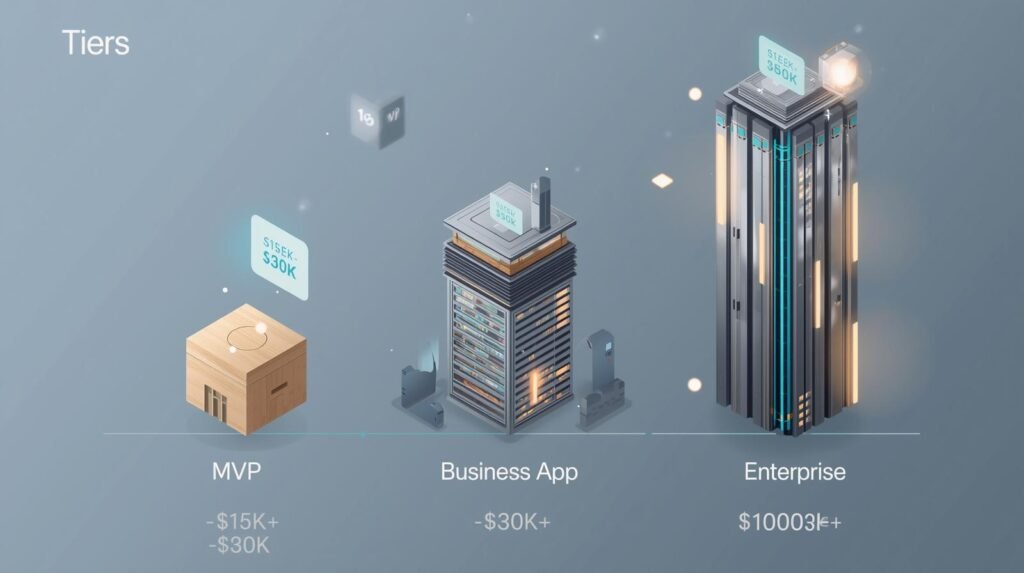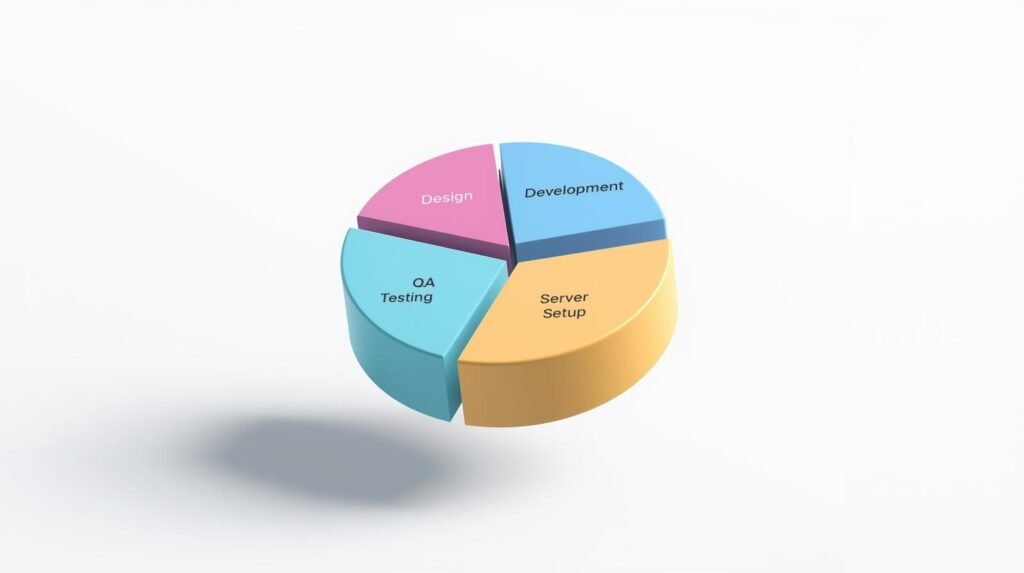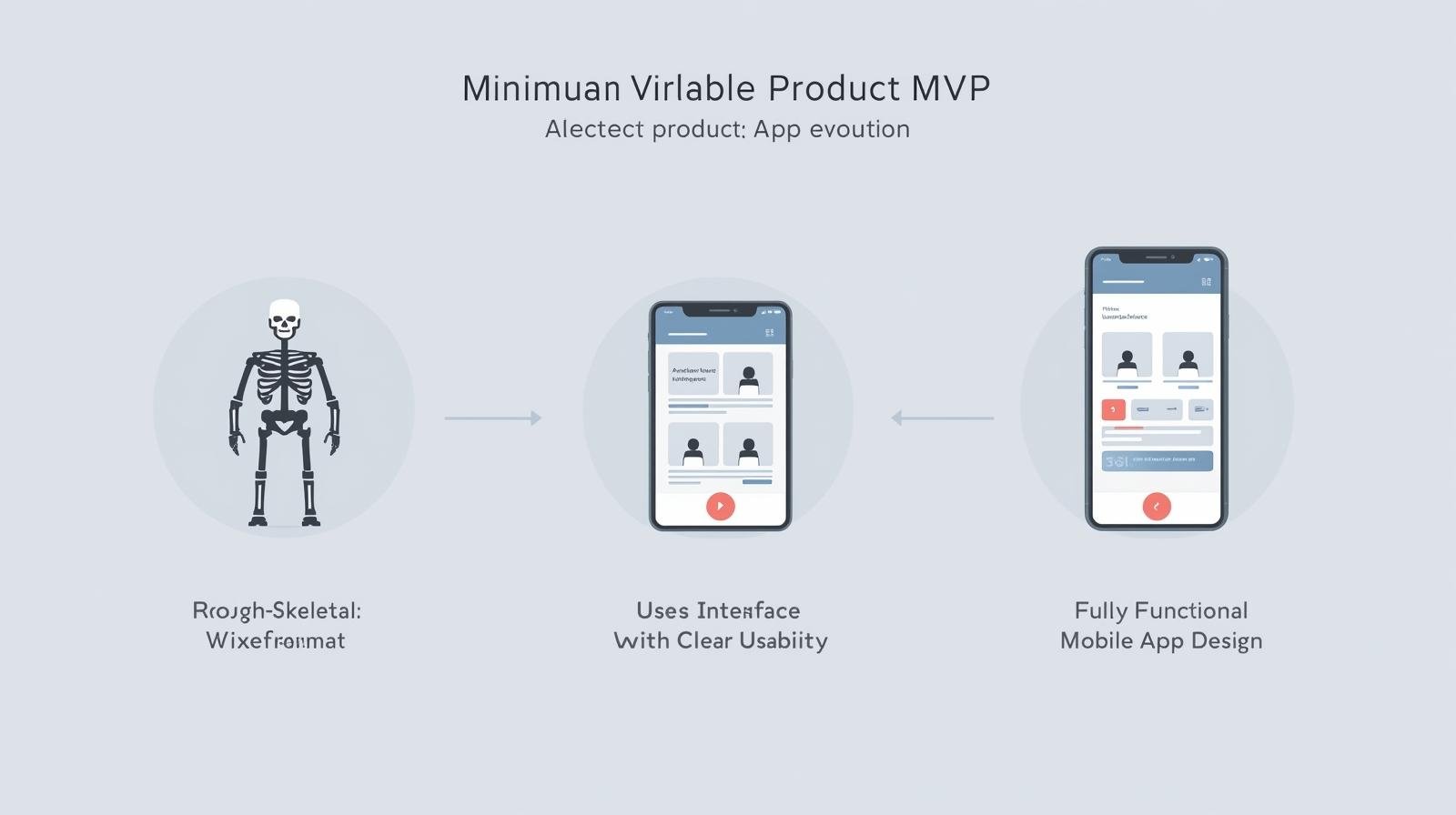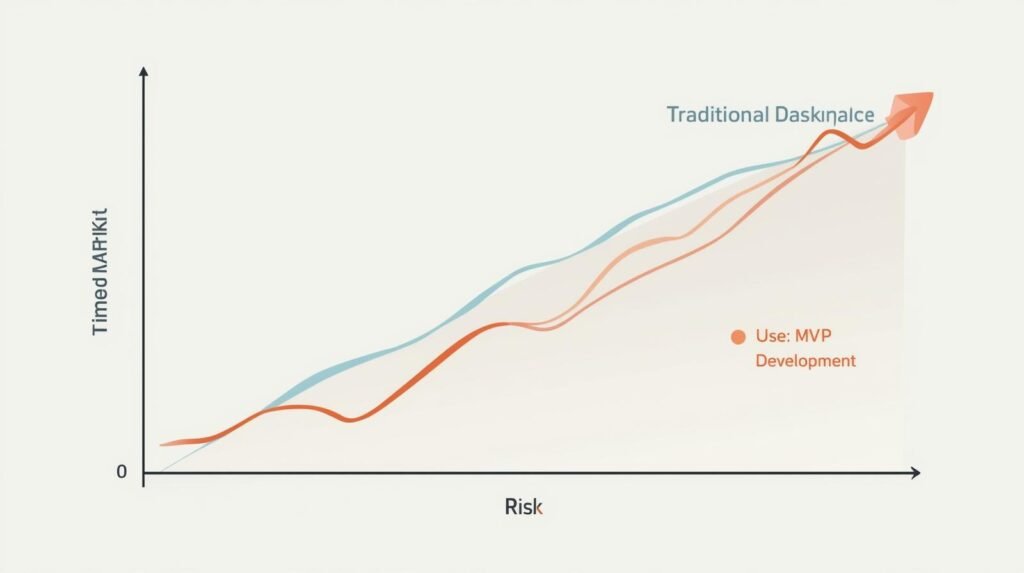
A large portion of startups don’t fail because the idea is bad. They fail because the founders spend a year perfecting features nobody requested. The pattern is predictable: long development cycles, ballooning budgets, and assumptions that never get tested in the real world.
The smarter play is the MVP — a Minimum Viable Product. Not a buggy draft. Not a half‑built app. A complete, functional product with minimum features required to validate demand.
It’s the difference between spending twelve months crafting a hypothetical masterpiece and spending three months shipping something users can actually react to. In 2025, speed‑to‑market is no longer optional — it’s survival.
The Cupcake vs. Wedding Cake Model
Imagine you’re a baker.
A client orders a wedding cake and you disappear for three weeks to perfect it. They’re hungry long before it’s finished. That silence — that absence — kills their excitement.
The MVP flips the script.
Deliver a cupcake first. Small. Complete. Edible. It proves your flavor, your frosting, and your expertise. If they like it, you earn the right to bake the wedding cake later.
Same with apps:
- full platform with ten dashboards and AI integrations → Wedding Cake
- a working core product where a user can sign up and solve one problem → Cupcake
The alternative analogy applies:
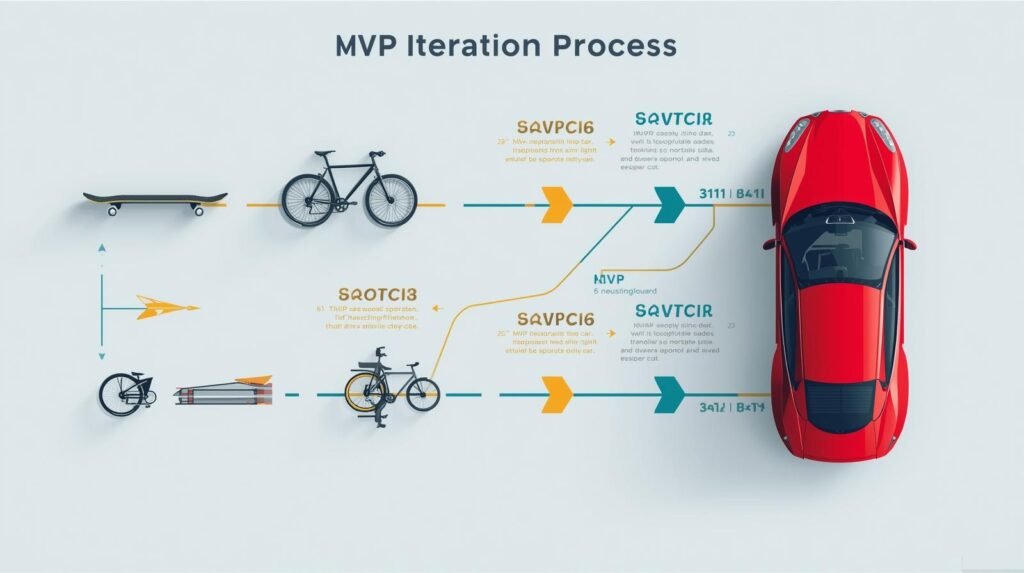
Skateboard → Bike → Car
Not:
Wheel → Frame → Engine → Car.
The skateboard moves. The wheel does not.
Movement matters.
Saving Cash: The Runway Problem
Startups don’t die because of bad concepts. They die because they run out of money.
Every founder has a runway — the number of months before cash hits zero.
MVPs extend that runway.
A nine‑month development cycle burns capital fast. Salaries, design revisions, server costs, and scope creep eat financial reserves. A three‑month MVP, by contrast, preserves resources and creates an opportunity to validate demand before scaling.
When you pursue minimum viable product development, you minimize financial exposure. You spend less on assumptions and more on proof. Investors appreciate discipline. Customers appreciate speed.
The harsh truth:
Funding dries up faster than founders think. The MVP is not a hack; it’s protection.
Identifying Scope Creep Before It Destroys the Budget
Scope creep is subtle.
It starts with:
“Users will want dark mode.”
Then:
“Let’s add in‑app chat.”
Then:
“We should add analytics dashboards.”
Before long, your MVP becomes a full‑blown enterprise platform — without a single real user.
Founders often chase their imagination instead of market feedback. The discipline lies in separating:
- Must‑Have → Core value
- Nice‑to‑Have → Luxury features
Examples:
Must‑Have: Create account, complete primary task, pay.
Nice‑to‑Have: Leaderboards, custom themes, gamification.
If it doesn’t serve the core utility or revenue model, it waits.
Code Nest’s job is often saying “No” more than “Yes.” Because guarding the scope protects the runway.
The Feedback Loop: Data Beats Assumptions
You think you understand the user.
You don’t. Not until they use your product.
MVPs expose assumptions:
- Will users pay?
- Which features matter?
- Which features get ignored?
Instead of:
Design → Build → Hope
You operate:
Launch → Observe → Improve
That loop turns a risky guess into an informed iteration. It’s not slower; it’s exponentially faster. You deliver what users actually value — not what you think they value.
Real market validation begins after launch, not before.
How Code Nest Accelerates MVP Launch
Our method is simple:
Build fast. Build lean. Build scalable.
We avoid over‑engineering. You don’t need cloud clusters designed for a million users when you currently have none. You need a stable, scalable foundation that can evolve once traction begins.
We use modern frameworks like Next.js or React Native for a reason:
- reusable components
- rapid development cycles
- scalable architecture
- low maintenance overhead
We target a 90‑day launch timeline because market validation shouldn’t take a year.
Our goal isn’t to win awards for elegance. It’s to get you customers, feedback, and revenue before your budget collapses.
The Real World Benefits of MVP First
Speed to Market
Competitors launch faster.
Users move on quickly.
Funding cycles shifted — investors expect traction, not theory.
The earlier you launch, the sooner you learn.
Lower Cost to Failure
Failure at $20,000 is a lesson.
Failure at $100,000 is a shutdown.
Pivot Capability
If your idea needs a shift, you can shift.
No sunk cost guilt.
No attachment to unnecessary features.
No emotional investment in fantasy.
Real Data Over Opinions
Customer clicks outweigh founder imagination.
Every successful startup understands this principle:
Real feedback > long planning cycles.
When MVP Is NOT the Right Choice

There are exceptions:
- high‑risk medical apps
- apps requiring regulatory compliance
- mission‑critical safety software
But for:
- marketplaces
- SaaS products
- mobile apps
- booking platforms
- niche utilities
An MVP is the logical first step.
What an MVP Should Deliver
A true MVP should:
- solve one core problem
- onboard users easily
- validate demand
- collect feedback
- accept payments (if required)
It should NOT:
- attempt to serve everyone
- chase vanity features
- spend months perfecting UI polish
A working product beating a perfect idea — that’s the mindset.
Conclusion
Perfection is expensive. Delay is fatal.
A live app with limited features is infinitely more valuable than a perfect app still trapped in development. In 2025, markets reward momentum. Customers reward clarity. Investors reward discipline.
If you’re sitting on an idea, sketching screens, and waiting for the “right moment,” you’re already losing time. The right moment is when users can start validating — not when every feature is built.
Have an app idea? Let Code Nest scope your MVP and get you to market in 90 days.