Most successful software products don’t start with a single line of code. They start with a conversation, a sketch, or a frustration with a current process. There is a common misconception in the business world that software development is a straight line—an “idea” that goes into a black box of programming and comes out as a finished product.
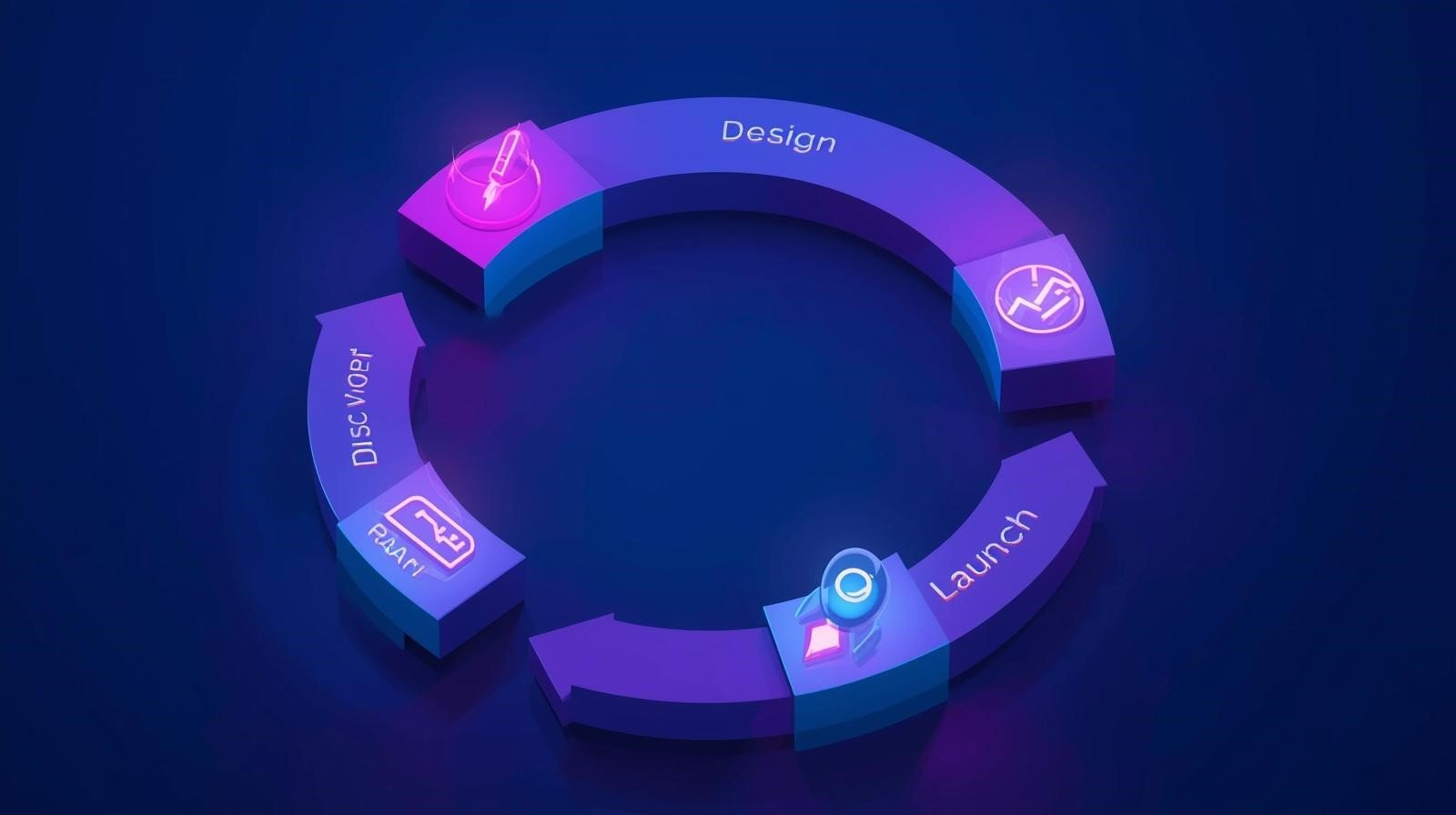
In reality, building a digital product is an iterative journey. Without a structured roadmap, a project can quickly spiral into “feature creep,” ballooning budgets, and missed deadlines. This structured roadmap is known as the Software Development Life Cycle (SDLC).
At Code Nest, we guide our partners through every phase of this journey. Understanding the software development lifecycle stages is critical for any business owner who wants to transition from a conceptual “vision” to a market-ready asset.
1. Discovery and Planning: The Foundation
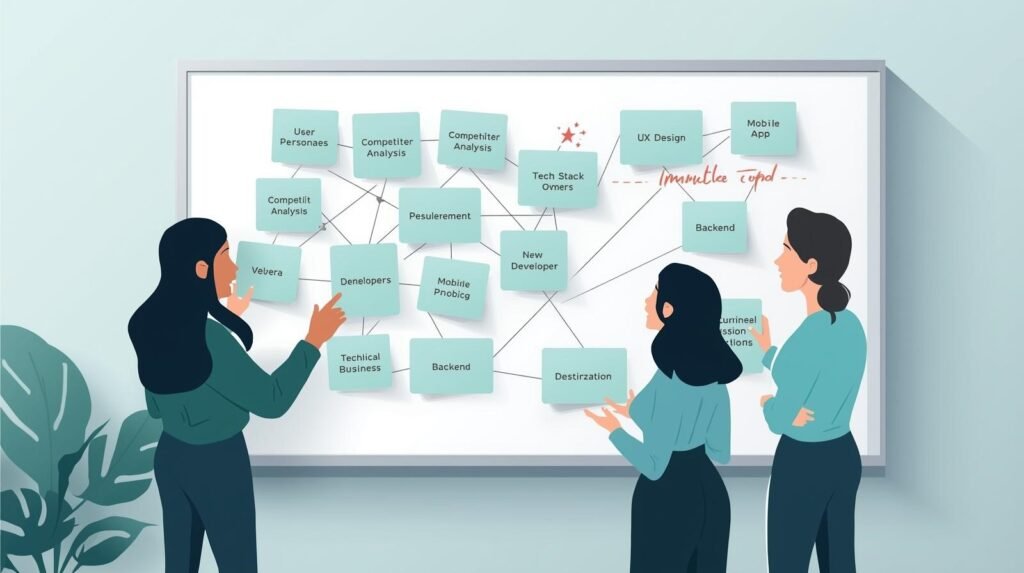
Before we discuss servers or syntax, we must define the business problem. The discovery phase is the most undervalued part of the development process, yet it determines the success of every stage that follows.
In this stage, the goal is to align the technical team with the business objectives. We ask hard questions:
- Who is the primary user?
- What is the “Minimum Viable Product” (MVP)?
- What does a successful launch look like for your bottom line?
By conducting market research and competitor analysis during discovery, we ensure that we aren’t just building a functional app, but a competitive one. Planning here prevents “pivots” halfway through development that could cost tens of thousands of dollars in wasted engineering time.
2. Requirement Analysis: Defining the “What”
Once the goal is clear, we move into requirement analysis. This is where we document exactly what the software needs to do. This results in two sets of requirements:
- Functional Requirements: What the system does (e.g., “A user can reset their password via email,” or “The admin can generate a monthly revenue report.”)
- Non-Functional Requirements: How the system performs (e.g., “The site must load in under two seconds,” or “The app must handle 5,000 concurrent users.”)
Gathering these requirements allows us to choose the right tech stack. For instance, an enterprise dashboard might benefit from the speed of Next.js, while a social media app might require the cross-platform flexibility of React Native.
3. Design: Building the Digital Blueprint
The design phase is where your idea takes its first visual form. However, this is more than just selecting colors and fonts. We focus on two primary disciplines: UI (User Interface) and UX (User Experience).
The design team creates:
- Wireframes: Low-fidelity sketches showing where elements go.
- User Journey Maps: A visual path showing exactly how many clicks it takes for a user to accomplish a task.
- High-Fidelity Prototypes: Interactive mockups that look and feel like the finished product.
A professional design phase allows stakeholders to see the product logic before a single hour of expensive backend coding is used. It is far cheaper to change a button’s location in a design file than it is to rewrite a database architecture.
4. Development: The Construction Phase
This is where the actual building happens. At Code Nest, we typically utilize an Agile software development process. Instead of building the entire app in secret and presenting it months later, we work in “Sprints.”
Sprints are short cycles (usually 2–3 weeks) where we build a specific set of features. At the end of each sprint, we demonstrate progress to you. This keeps the project transparent and allows us to make minor adjustments based on real-world feedback rather than assumptions.
This phase is divided into the “Frontend” (the part your customers interact with) and the “Backend” (the engine, the database, and the APIs that make the app work).
5. Testing and Quality Assurance (QA)
Building software is a complex puzzle, and even the best developers will encounter bugs. The testing phase is a systematic attempt to break the software so that your customers don’t.
We perform several types of tests:
- Unit Testing: Checking individual components to ensure they function correctly.
- Integration Testing: Making sure the different modules (like the payment gateway and the inventory database) work together.
- Security Testing: Ensuring the data is protected from unauthorized access (an essential step, as we discussed in our guide to secure WordPress website hosting).
- UAT (User Acceptance Testing): Final testing by a select group of target users to see if the workflow makes sense to them.
6. Deployment: The Go-Live Moment
After the software has passed every stress test and security check, it is ready for the world. Deployment is the technical process of moving the code from a staging environment to a live server.
This stage involves:
- Configuring production servers.
- Migrating data from old systems.
- Finalizing SEO configurations.
- Submitting mobile apps to the Apple App Store and Google Play Store.
While the “Go-Live” moment is the most exciting of the software development lifecycle stages, we treat it with extreme caution, often choosing “low-traffic hours” for deployment to minimize any potential interruption to existing business operations.
7. Maintenance and Evolution
Software is never truly “finished.” The moment an app is released, real users start providing feedback, browsers update, and security threats evolve.
Post-launch maintenance is about two things: stability and growth.
- Stability: Regular updates to libraries, security patching, and server monitoring.
- Growth: Developing new features based on actual user data.
At Code Nest, we view launch day as the beginning of our relationship, not the end. We use analytics to see how people use the product, identifying bottlenecks and opportunities to further optimize for conversion.
Conclusion: Strategy Over Speed

Speed to market is important, but a product rushed through the lifecycle without a solid discovery and testing phase will inevitably fail or require a costly rebuild. Following a disciplined software development lifecycle ensures that every dollar you invest is going toward building an asset that is secure, scalable, and intuitive.
Whether you are building a custom e-commerce engine or an enterprise B2B platform, the process remains your most important tool. It turns chaos into a structured sequence of measurable milestones.
Have a visionary idea but don’t know the first step? Contact Code Nest today. Our architects specialize in guiding businesses through the complete software lifecycle, ensuring your vision translates into a high-performance reality.
Leave a Reply