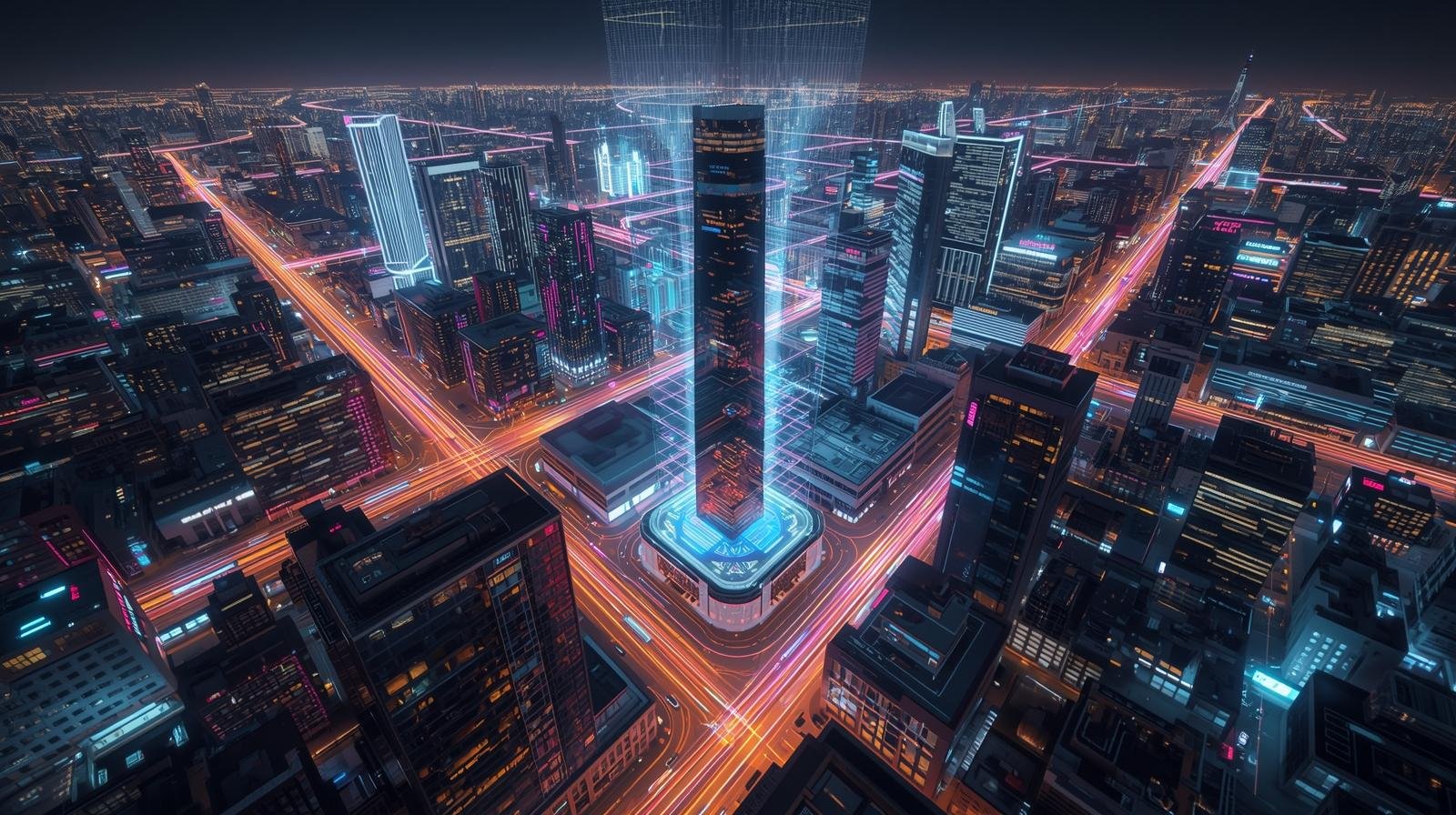
If you feel like the world is moving faster than it was five years ago, you’re right—digitally speaking, it is. As we navigate the midpoint of the decade, we are witnessing the collision of advanced cellular networks and the “everything-connected” world. According to the latest Ericsson Mobility Report, 5G subscriptions are projected to surpass 5.3 billion globally by 2029, but the real story isn’t just about faster smartphones. It is about the billions of sensors, machines, and autonomous systems that finally have the bandwidth to breathe.
For the last decade, the Internet of Things (IoT) has been constrained by the limitations of 4G—limited device density, high power consumption, and frustrating latency. In 2026, those bottlenecks have shattered. We have entered an era where 5G is the foundational layer, and the roadmap toward 6G is already redefining the Future of IoT.
As a tech leader or developer, understanding this connectivity evolution is no longer optional. It is the difference between building a static application and an autonomous, real-time ecosystem.
1. Massive Device Density: When Every Square Inch Becomes “Smart”
One of the most frequent search queries for IoT developers is: “What is the main advantage of 5G for IoT?” While the average consumer cares about 4K streaming, the industrial world cares about Density.
Legacy 4G networks could reliably support about 10,000 to 100,000 devices per square kilometer. While that sounds like a lot, it is a drop in the bucket for a modern smart city or a fully automated Tesla-style Gigafactory. 5G, particularly through a standard called Massive Machine Type Communications (mMTC), supports up to 1 million devices per square kilometer.
Why This Matters for the Future of IoT:
- Precision Agriculture: We are moving from “one sensor per field” to “one sensor per plant,” allowing for micro-dosing of water and nutrients.
- Urban Micro-grids: In 2026, smart cities are using 5G to connect every streetlight, trash can, and water pipe, creating a real-time digital twin of the city that reduces energy waste by 30%.
- Logistics Transparency: Item-level tracking is now the gold standard. Every individual box in a warehouse can now report its temperature, orientation, and humidity levels simultaneously without crashing the local network.
2. Ultra-Reliable Low Latency (URLLC): The Era of “Tactile Internet”
Speed is vanity; latency is sanity. To address the search intent regarding the “Critical IoT” movement, we must look at URLLC (Ultra-Reliable Low Latency Communications).
4G latency averaged around 50 milliseconds. 5G has brought that down to 1 millisecond. In the context of the Future of IoT, this change isn’t just an improvement; it’s a physiological shift. This sub-millisecond response time is equivalent to the human nervous system, enabling what we now call the “Tactile Internet.”
Use Cases of Critical IoT:
- Remote Surgery: Using 5G-powered robotic arms, a specialist in London can operate on a patient in a rural clinic with zero perceived lag.
- Autonomous Vehicle-to-Everything (V2X): For self-driving cars to move beyond pilot programs, they must communicate with traffic lights, pedestrians, and other cars in real-time. 5G URLLC provides the “reflexes” needed to prevent collisions at high speeds.
- Collaborative Robotics (Cobots): In manufacturing, robots and humans now work side-by-side. 5G ensures that if a human enters a robot’s work zone, the machine freezes instantly, preventing workplace accidents.
3. Network Slicing: The Holy Grail for Enterprise IoT
A significant barrier to the Future of IoT has always been the “One-Size-Fits-All” nature of cellular networks. In 2026, the rise of 5G Network Slicing has solved this.
Network slicing allows telecommunications providers to create multiple virtual networks (slices) atop a single physical 5G infrastructure. Each “slice” is custom-tailored for a specific IoT use case.
- The Massive Slice: Low-bandwidth, low-power, but massive density for thousands of water meters.
- The Mission-Critical Slice: Ultra-secure, high-priority, sub-millisecond latency for hospital equipment.
- The Mobile Broadband Slice: High-throughput for 8K security cameras and AR-enhanced field workers.
For business owners, this means your “smart factory” doesn’t have to compete for bandwidth with someone watching TikTok in the parking lot. You own a dedicated portion of the spectrum.
4. Beyond 2030: How 6G Will Create “Sentient” IoT
If 5G is about connecting the world, 6G is about sensing it. While still in the developmental phase, the Roadmap to 6G (projected for commercial launch around 2030) is the ultimate frontier for the Future of IoT.
6G aims to use Terahertz (THz) frequencies and integrated sensing and communication (ISAC). In 2026, researchers are already testing 6G prototypes that don’t just send data, but act like radar.
How 6G Will Transform IoT:
- Integrated Sensing: The network itself will be able to “see” the environment. Your 6G IoT hub won’t just tell you that your front door opened; the radio waves themselves will recognize the shape of the person entering, their gestures, and even their heartbeat.
- Zero-Battery IoT: 6G envisions “Ambient Powering,” where tiny IoT sensors harvest energy directly from the radio waves in the air. This eliminates the “e-waste” of billions of lithium batteries.
- True Holographic Presence: 6G’s predicted throughput of 1 Terabit per second (1,000x faster than 5G) will enable mobile IoT devices to project 3D holograms for collaborative engineering or education.
5. The Bottlenecks: Security and Energy Challenges
We would be remiss if we didn’t address the primary “Fears” users search for: “Is 5G/6G IoT safe?”
As the Future of IoT grows, so does the “Attack Surface.” In a world where a million devices are connected in a single kilometer, every sensor is a potential entry point for a hacker. Furthermore, the sheer volume of 5G base stations required to maintain these high frequencies creates a massive energy demand.
The solutions we are seeing in 2026 involve AI-Native Networks. We are no longer using manual firewalls; instead, AI agents integrated into the 5G core are constantly monitoring for “anomalous data traffic,” isolating compromised sensors in microseconds before a breach can spread.
Key Takeaways
- Density over Speed: 5G’s support for 1 million devices per sq km is the true driver for smart cities and industrial automation.
- Zero-Latency Realism: The move to 1ms latency enables “Tactile Internet,” transforming remote surgery and V2X transportation.
- The Power of Slicing: Enterprises can now claim a “Virtual Private Network” on the public 5G spectrum, ensuring guaranteed quality of service for critical IoT.
- The 6G Sensing Frontier: 6G will turn wireless networks into sensors, enabling “battery-less” devices and holographic interaction.
- AI as the Protector: With billions of new connections, AI-driven security is the only way to safeguard the expanded IoT landscape.
Leave a Reply