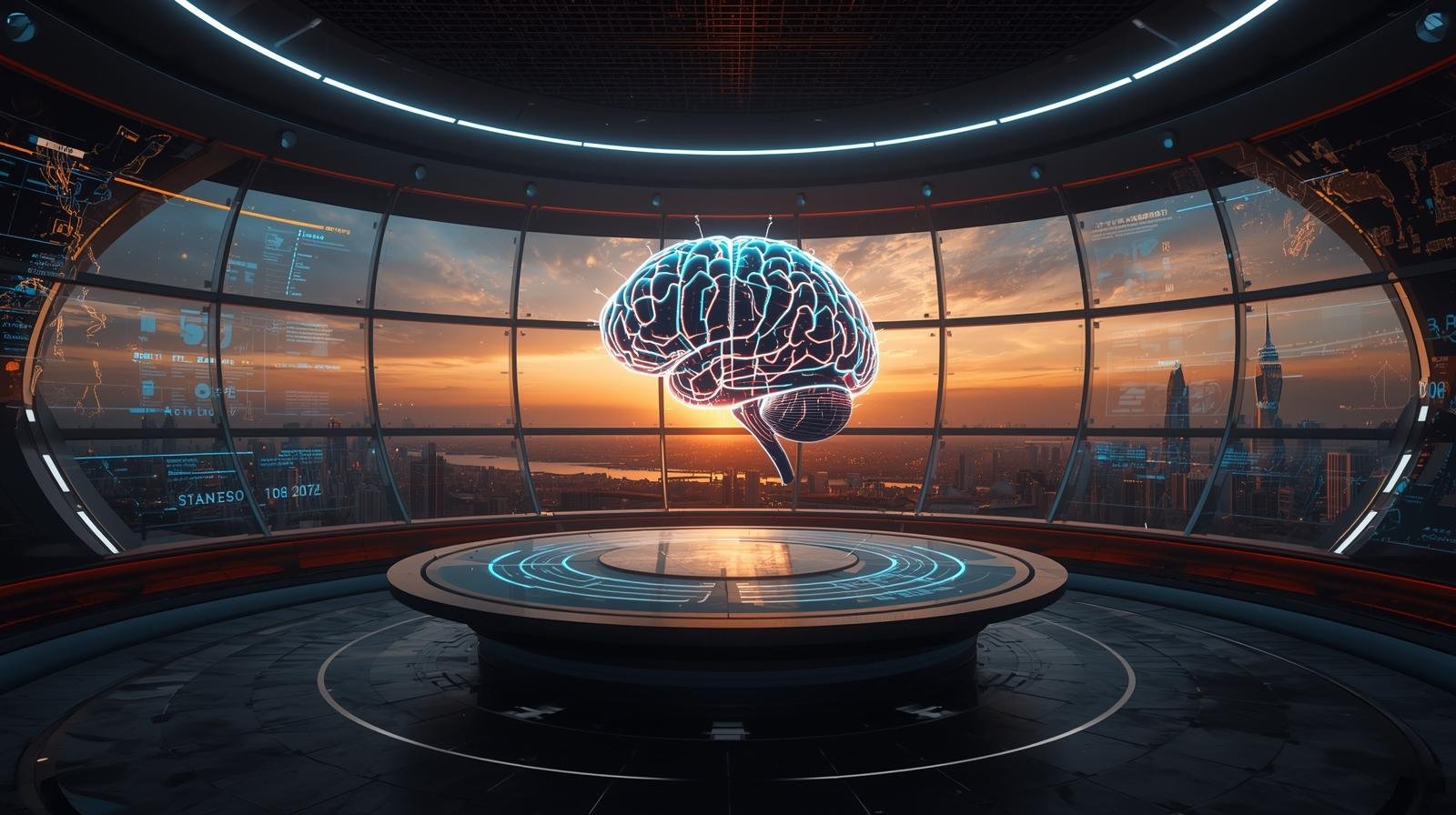
In 2023, the world was mesmerized by the capabilities of a few Silicon Valley chatbots. By 2026, that fascination has turned into a strategic frenzy. According to recent market intelligence, over 40 nations have collectively pledged more than $50 billion toward domestic AI infrastructure in the last 24 months. We are no longer living in the era of “AI as a Service” provided by a handful of tech giants; we have entered the age of Sovereign AI.
Nations have realized that artificial intelligence is not just a productivity tool—it is the 21st-century equivalent of electricity, oil, and nuclear energy combined. If a country does not own its “computational destiny,” it risks becoming a digital colony.
As a technology leader or investor, understanding the shift from centralized cloud-based intelligence to nationally owned infrastructure is critical. In this deep dive, we explore the rise of Sovereign AI, why the global geopolitical map is being rewritten by GPU clusters, and why every major economy is now rushing to build its own digital “brain.”
1. What is Sovereign AI and Why is Every Nation Scrambling for It?
To answer the “Search Intent” for those asking for a definition: Sovereign AI refers to a nation’s physical and strategic capability to produce artificial intelligence using its own infrastructure, data, workforce, and business networks.
For decades, the global tech stack followed a centralized model. Whether you were in Paris, Dubai, or Tokyo, your digital life likely resided on servers in Northern Virginia or Seattle. But the sudden surge in generative AI changed the stakes. If an AI model becomes the primary way a citizen learns, a doctor diagnoses, or an engineer builds, then the country providing that AI holds immense power over that nation’s people.
Why the urgency?
Countries are now treating AI as critical infrastructure. They are investing in “National Compute Foundations”—massive data centers filled with tens of thousands of specialized chips (predominantly from NVIDIA) designed to stay under national jurisdiction. The message is clear: To participate in the future economy, a nation must own the means of intelligence production.
2. The Great Decoupling: Escaping the Silicon Valley “Brain Drain”
The most significant search intent among government CTOs today is: “How do we reduce dependency on foreign AI providers?” This desire for independence stems from the “Innovation Chokepoint.”
Currently, a significant portion of the world’s most advanced AI models (like those from OpenAI, Google, and Meta) are governed by U.S. laws and corporate interests. This creates several strategic risks:
- Availability Risk: What happens if geopolitical tensions lead to an AI embargo? A country that relies on foreign LLMs for its healthcare or energy grid could find its economy paralyzed overnight.
- Cost Predictability: Commercial AI providers can change pricing or access levels at will. Building Sovereign AI allows a country to stabilize costs for its domestic industries.
- Intellectual Property Protection: When a local startup uses a foreign API, their unique data is often used—consciously or unconsciously—to train the foreign provider’s future models. Domestic AI keeps national secrets and proprietary innovation within the borders.
Nations like France (with Mistral) and the UAE (with Falcon) are leading the way, proving that sovereign models can compete with, and sometimes outperform, the American counterparts while keeping control firmly in local hands.
3. Cultural Preservation: Preventing “Linguistic Colonialism” in Neural Networks
A high-authority tech analysis of Sovereign AI must address the “Values Gap.” AI models are mirrors of their training data. Currently, most global models are trained on English-language internet data, which carries the cultural biases, social norms, and ethical viewpoints of the Western world.
For the rest of the world, this is a form of digital erasure.
- Arabic Context: A model trained on Reddit and the New York Times might struggle to provide culturally accurate legal or religious advice in Riyadh.
- Japanese nuances: The subtle, high-context communication style of Japanese business is often lost on “Generalist” AI trained primarily on American business documents.
Building Sovereign AI allows a nation to curate its own training sets. It ensures that the neural networks powering their government services reflect their unique language, history, and social values. It is a defense of culture in the digital age. By feeding models localized datasets—ranging from classical literature to regional judicial archives—nations are ensuring that the “AI lens” through which their citizens see the world remains their own.
4. Economic Resilience: Transforming AI into a National Utility
Just as a country builds roads to foster trade or a power grid to run factories, building a Sovereign AI foundation is now an economic play. In 2026, we have moved past the “experiment” phase; AI is now a direct driver of GDP.
NVIDIA’s Jensen Huang has famously noted that we are at the beginning of a “new industrial revolution” where the product is intelligence. Nations that build their own AI capacity can:
- Fertilize Domestic Startups: By providing local startups with low-cost or subsidized “National Compute,” a government can foster a Silicon-Valley-style ecosystem without the silicon leaving the country.
- Automate Public Services: Sovereign models can be deeply integrated into the specific civil codes and social services of a nation, streamlining everything from visa processing to tax filing far more efficiently than a generic foreign model could.
- Talent Retention: To prevent the “brain drain” of the smartest computer scientists to Palo Alto, countries are building domestic “Sandboxes” and national labs, offering elite researchers the chance to work on their nation’s sovereign future.
5. Security and Ethics: Keeping National Secrets Domestic
Finally, the most high-stakes motivation is security. No defense department wants to feed tactical data into a third-party server located on another continent.
Sovereign AI allows for “Air-Gapped” intelligence. A nation can train models on classified military intel, healthcare registries, and infrastructure blueprints without fear of leakage. This leads to several unique national advantages:
- Cyber-defense: Nationally tuned AI can monitor a country’s specific grid for anomalies that look like foreign interference.
- Health Records: Only through sovereign infrastructure can a nation truly protect the genetic privacy of its citizens while still allowing AI to find patterns in public health.
- Governance: National AI allows for the implementation of the EU AI Act or the UAE Artificial Intelligence and Advanced Technology Council regulations at the hardware level, ensuring every line of generated code or text adheres to domestic law.
Conclusion: The Road to Computational Autonomy
The transition to Sovereign AI is the defining tech trend of the decade. We are moving from a monolithic world where a few companies provide the “intelligence” to a multipolar world where nations take ownership of their neural destiny.
For nations, the choice is simple: Build your own AI, or prepare to be ruled by someone else’s. In 2026, the strength of a flag is determined not just by its military or its currency, but by its compute power.
Key Takeaways
- Autonomy is Non-negotiable: Sovereign AI prevents nations from being hostage to the strategic and economic changes of foreign tech companies.
- Infrastructure is the Base: Success depends on building “National Compute Foundations”—owning the physical hardware (GPUs) as much as the software.
- Data Sovereignty: By keeping training data domestic, nations preserve their cultural values and prevent the digital erasure of their languages and social norms.
- AI as a Utility: In 2026, compute power is being treated like a public utility, providing the bedrock for a nation’s startups, hospitals, and civil services.
- A Strategic Choice: Digital sovereignty isn’t just about code; it’s about ensuring the future lens of national intelligence remains under the jurisdiction of the citizens it serves.
Leave a Reply