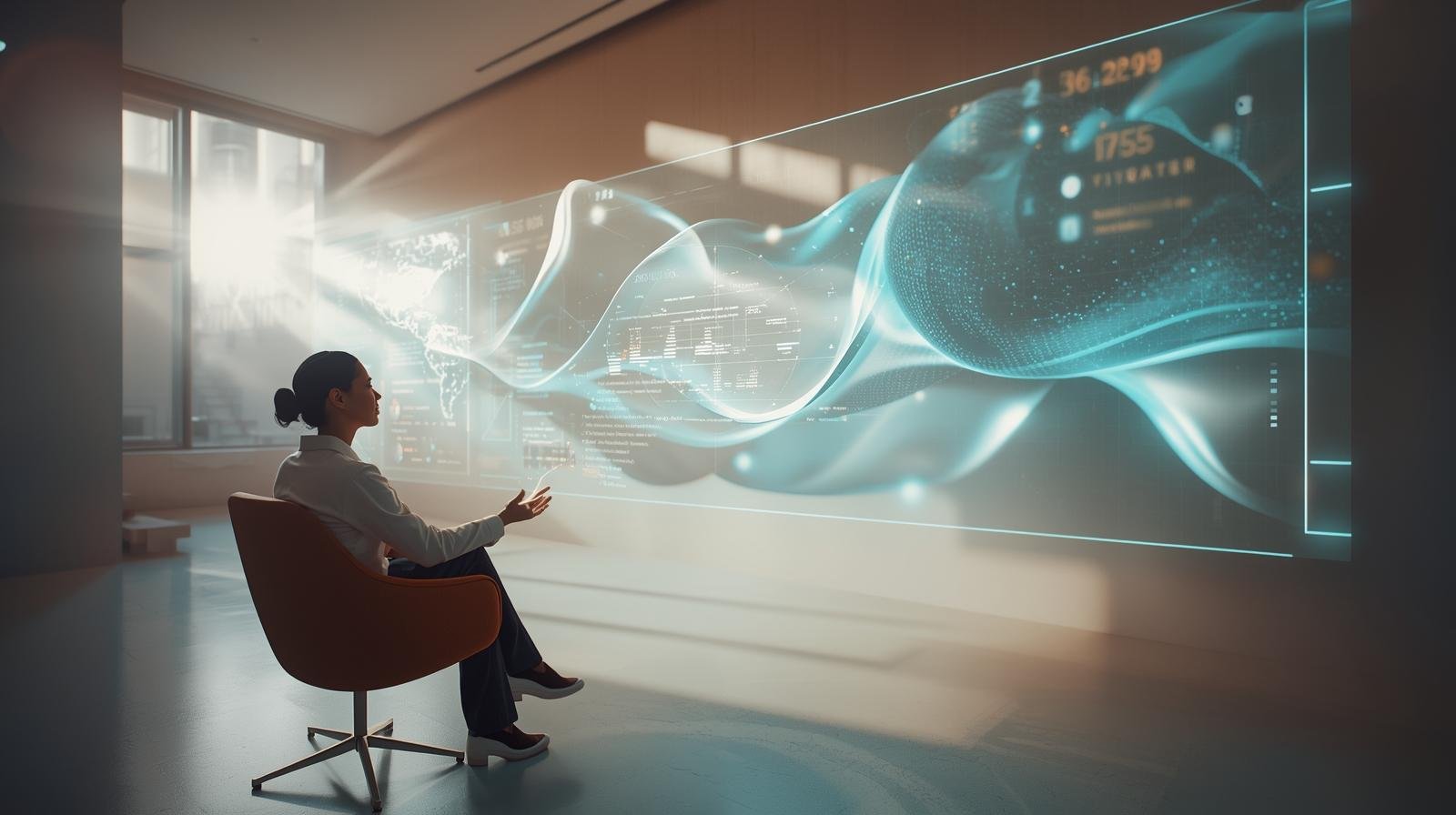
If you’re still designing digital experiences for an “average user,” you’re already obsolete. In 2026, the concept of a singular, static user interface is dead. According to the 2026 Global Design Index, hyper-personalized interfaces driven by Generative AI now account for a 45% uplift in long-term user retention compared to traditional, fixed-layout applications.
We’ve moved past the era where we merely “use” software. Today, software interprets us. The convergence of behavioral psychology and AI UX design has shifted the landscape from reactive interfaces to predictive ecosystems. The question is no longer “where does the user click?” but rather “how is the user feeling, and what cognitive load can they handle right now?”
For tech leaders and designers, this represents a fundamental pivot. We are no longer just pixel-pushers; we are architects of digital empathy. Let’s dive into how AI is leveraging the psychology of the human mind to redefine personalization in 2026.
1. Moving from Templates to Generative UI: The Dawn of True Hyper-Personalization
A frequent search query on Google today is: “What is AI UX design, and how is it different from traditional UI?”
The answer lies in the removal of the template. In the early 2020s, designers created a “design system”—a kit of parts that would look the same for everyone. In 2026, AI UX design utilizes Generative UI. This means the interface does not exist until the user opens the app.
Using real-time data from a user’s history, location, and current behavior, the AI generates a unique layout designed to minimize that specific person’s “friction.” If a user is a “skimmer,” the AI promotes high-contrast headings and bullet points. If the user is analytical, the interface prioritizes raw data and deep-dive toggles.
We are seeing a move away from “User Groups” toward the “User of One.” This satisfies the fundamental human psychological need for relevance. When an interface adapts to our specific cognitive style, it feels less like a tool and more like an extension of our own thought processes.
2. Emotional Resonance: Designing for Mood and Cognitive State
How many times have you closed an app because it felt “too loud” or overwhelming during a stressful day? One of the highest-growth areas in AI UX design for 2026 is Emotionally Intelligent Interfaces.
By analyzing multi-modal cues—such as the speed of touch interactions, voice tonality, or even the subtle biometrics shared from wearable devices—AI can detect a user’s frustration or fatigue.
Why IT Pros and Designers Care:
- Predictive Slowing: If the AI detects a high cognitive load (the user is stressed or multitasking), it simplifies the UI, hiding secondary features and using more whitespace to lower heart rate and stress.
- Aesthetic Fluidity: Interfaces in 2026 can shift their color palettes and typography in real-time. Cool, muted blues during high-stress hours; vibrant, energetic ambers for a morning workout app.
Search intent for developers often focuses on “how to reduce churn with AI.” The psychological answer is simple: users don’t leave apps that make them feel understood. By syncing the UI with the user’s biological state, AI UX design fosters a deep sense of “Digital Well-being.”
3. The Frictionless Myth: When AI UX Design Intentionally Slows Us Down
A fascinating trend in 2026 is the realization that “completely frictionless” isn’t always good for the psyche. In the past, we tried to make every interaction a one-tap process. However, the search intent behind “Why is UX personalization causing habituation?” highlights a new problem: when things are too easy, users disengage.
Modern AI UX design now uses “Benevolent Friction.” This is the psychological practice of using AI to identify moments where a user should stop and think—for instance, before confirming a major financial transaction or sharing a piece of misinformation.
The Behavioral Design Loop:
AI analyzes the user’s habituation. If the user is clicking on autopilot, the interface subtly shifts—changing button placements or requiring a unique gesture—to re-engage the prefrontal cortex.
This psychological “pattern interrupt” is essential for long-term trust. It signals to the user that the AI is not just a facilitator of mindless scrolling, but a guardian of their intentionality. In 2026, the most high-authority brands are those that prioritize the user’s mental health over “time spent in app.”
4. Addressing Search Intent: “How Does AI Affect User Psychology?”
One of the most profound impacts of AI UX design is the shift in the “Locus of Control.” Traditionally, the user felt they were the master of the machine. As AI begins to predict and pre-populate our choices, that psychological locus can feel like it’s shifting to the software.
To combat this, tech leaders in 2026 are focusing on Autonomous Transparency.
Designing for Trust:
- Explanatory Overlays: Instead of just changing a menu, the UI might briefly display a notification: “I’ve moved your most-used tools to the bottom for easier thumb reach based on your current posture.”
- Co-Creation Interfaces: Users can “tweak” the AI’s design logic. “More data, less fluff” or “I’m in focus mode” become universal UI commands.
By giving the user the ability to “peer behind the curtain,” designers ensure that personalization doesn’t turn into “manipulation.” In 2026, the psychological bond of trust is the only thing standing between a loyal user and a deleted app.
5. Ethical Design in the Age of Neuromarketing
Finally, we must address the “Persuasion Paradox.” With the power of AI UX design, we have the ability to exploit human vulnerabilities—scarcity triggers, FOMO, and dopamine loops—with 99% accuracy.
However, 2026 has seen a major push for ESG-Design (Environmental, Social, and Governance Design). Leading tech firms are now using “Ethics Agents” within their AI stack. These agents act as a watchdog, preventing the UX from turning into a “digital slot machine.”
Key Questions for Design Teams in 2026:
- Is this personalization benefiting the user’s goal or the company’s engagement metric?
- Does the AI have an “Exit Strategy” to prevent user addiction?
- Is the model inclusive of neurodivergent users who may react differently to adaptive interfaces?
Personalization is a privilege. In 2026, those who use AI UX design to enrich human potential rather than exploit human behavior will be the ultimate market leaders.
Key Takeaways
- Static UI is Obsolete: Future-proof your product by moving toward Generative UI that adapts to the “User of One.”
- Design for Biological State: Utilize multi-modal AI to interpret a user’s stress and cognitive load, adjusting whitespace and complexity in real-time.
- Leverage Benevolent Friction: Don’t fear slowing down the user; use AI to re-engage human intentionality when “autopilot” behavior becomes risky.
- Transparency Drives Trust: Ensure users understand why the interface is morphing. Keep the Locus of Control with the human.
- Ethics as Architecture: Use built-in AI “Ethics Agents” to prevent the UX from slipping into manipulative dark patterns.
Leave a Reply