The MVP Approach: Launching Your Startup App Faster
The startup ecosystem is littered with great-looking products that never reached real users. The reason is simple: founders chase perfection instead of validation. They obsess over polishing screens, adding “nice‑to‑have” features, and building a version 10.0 of a product that hasn’t survived version 0.1.
That mindset burns time and capital.
An MVP is not about cutting corners. It is about prioritizing survival. You solve the core problem, you test real demand, and you secure paying customers before scaling.
Perfection is the enemy of profit.
Speed is a competitive advantage.
If you want a business, not a hobby, the Minimum Viable Product model is the safest path to launch fast and learn early.
What Is an MVP (And What It Isn’t)?
Founders often misunderstand the MVP. They think it means:
- buggy code
- missing pages
- sloppy design
That’s wrong.
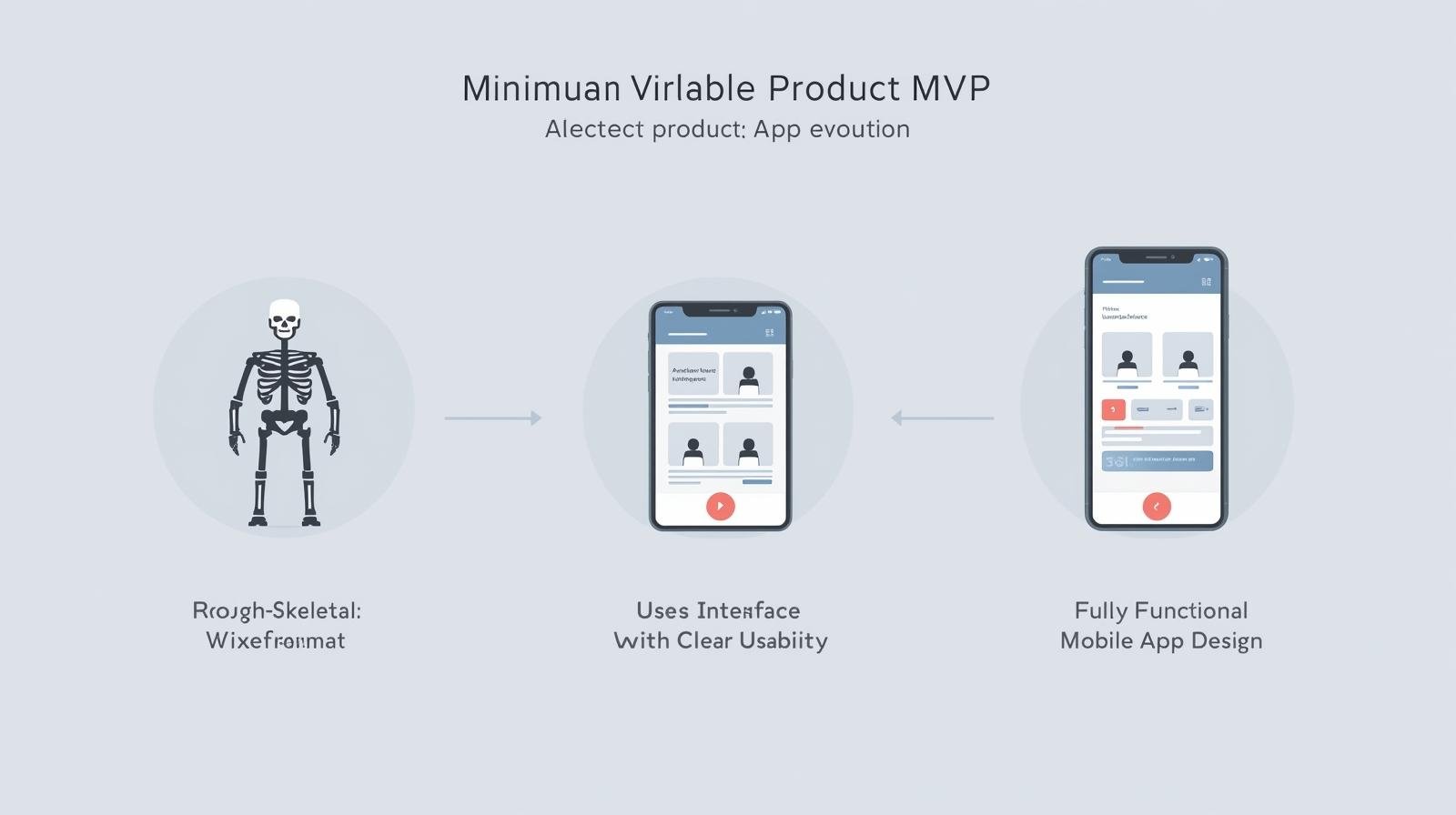
An MVP is a complete product with minimal features — lean but functional. Think utility, not bells and whistles.
If your users simply need to travel from point A to point B, your MVP is not a half-built car. It’s a skateboard. Then you turn it into a scooter. Then a bike. Then a car.
The goal is market validation, not feature completeness.
A polished product that nobody wants is still a failure.
The Financial Case for MVP
Cash is oxygen for startups.
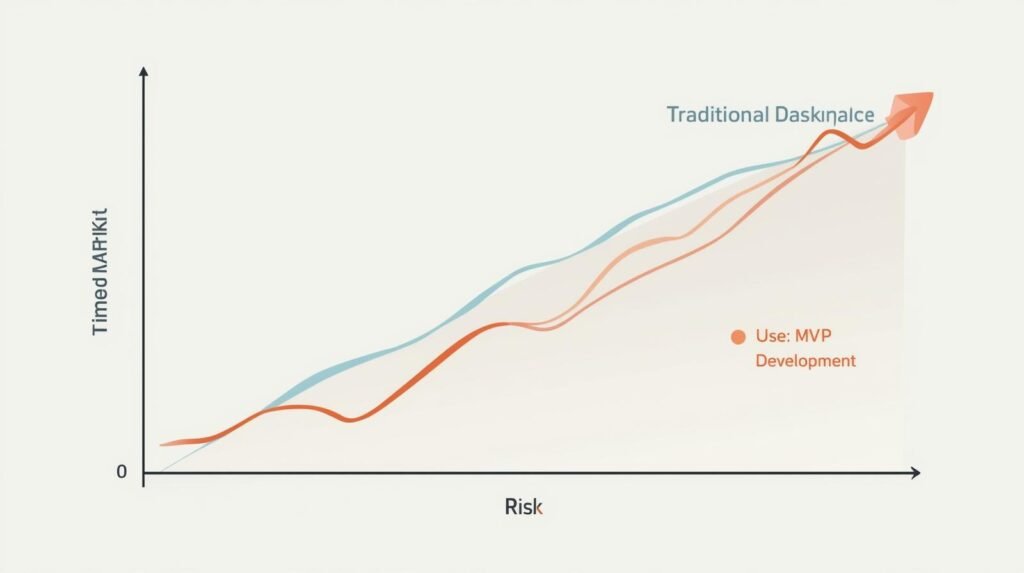
minimum viable product development reduces risk and protects runway because:
- You spend $20k instead of $100k.
- You validate the idea with real behavior, not assumptions.
- You pivot without burning your entire budget.
- You attract investors with usage metrics, not PowerPoint slides.
If you launch early and fail, you can recover.
If you launch late and fail, you’re done.
That is the harsh reality.
Identifying the Enemy: Feature Creep
Feature creep is the silent killer of timelines and budgets.
It sounds like this:
- “We need chat.”
- “We need dark mode.”
- “We need AI integration.”
- “We need live support.”
None of those matter if you don’t have users.
A founder’s ego often pushes complexity. A strategist pushes discipline.
At Code Nest, we enforce a ruthless prioritization filter:
If the feature doesn’t directly validate the core hypothesis, it waits.
This discipline is why MVPs launch in 90 days instead of 12 months.
The Feedback Loop: Data Beats Assumptions
Every founder believes they understand their users. Most are wrong.
Real users behave differently than theoretical ones.
You think they need:
- advanced filters
- custom dashboards
- integrations
But maybe they simply wanted:
- fast onboarding
- one core feature
- clear pricing
The MVP gives you behavioral data instead of imaginary insights.
Launch → Measure → Iterate.
Not Design → Overbuild → Pray.
Feedback reduces uncertainty.
Metrics guide development.
Revenue validates demand.
MVP vs Full Build (A Reality Check)

Here’s what usually happens:
Full Build Approach
- 12 months
- $100k–$250k
- Feature‑heavy
- No users until launch
- Huge risk
MVP Approach
- 60–90 days
- $15k–$40k
- Feature‑focused
- Users early
- Controlled risk
Reality: users don’t reward you for complexity. They reward you for solving a problem.
When You Should Build an MVP
If any of these apply, you need an MVP:
- It’s a new product category
- You are pre‑revenue
- You do not have guaranteed demand
- You don’t have unlimited capital
- You want to pitch investors
If you already have:
- paying customers
- proven metrics
- product‑market fit
You can scale.
If not, you test.
How Code Nest Builds MVPs
Our goal: launch fast without sacrificing scalability.
We design MVPs using:
- Next.js & React Native for cross‑platform reach
- modular architecture for future growth
- MySQL or Firebase for lean data structures
We focus on the core utility first:
- signup + login
- payment integration
- primary feature
- analytics tracking
We target a 90‑day maximum timeline because startups need momentum.
The objective is not to impress developers.
The objective is to collect revenue.
The Hidden Value: Investor Confidence
Investors don’t want ideas.
They want traction.
When you have:
- user signups
- early revenue
- usage analytics
- retention proof
You gain leverage.
A strong MVP often raises more funding than a polished product with no market validation.
Data beats design.
Always.
The Real Reason Founders Resist MVPs
Ego.
A founder wants their dream app. They want the feature set in their head, not the version the market needs.
But markets don’t care about dreams.
They care about utility.
Launching late is not strategic.
It is denial disguised as ambition.
Scaling After MVP
The MVP is step one, not the finish line. After validation, you scale:
- improved UX
- automation
- new features
- integrations
- marketing funnels
But only after demand is proven.
You earn the right to grow.
Final Thoughts
Speed > Complexity.
Revenue > Features.
Validation > Assumptions.
If your goal is to build a business — not just an app — the MVP approach is the smartest, fastest, lowest‑risk path.
Stop polishing. Start launching.
Stop dreaming. Start validating.
Code Nest builds MVPs designed to hit the market in 90 days and earn real traction.
Leave a Reply