
In early 2024, the tech world was rocked by job postings from companies like Anthropic and OpenAI offering salaries as high as $335,000 per year for a role that didn’t exist eighteen months prior: the “Prompt Engineer.” At that time, it seemed like magic—a digital whisperer who could coax the perfect answer out of a stubborn Large Language Model (LLM).
However, as we move through 2026, the hype cycle has cooled into a gritty, industrial reality. Skeptics once argued that AI would eventually learn to “prompt itself,” rendering the human middleman obsolete. Yet, the data tells a different story. According to recent Global AI Talent Analytics, while the number of standalone “Prompt Engineer” titles has leveled off, the demand for Advanced Prompting and Orchestration skills across engineering and product roles has surged by 450%.
The question is no longer “Will AI replace the prompt engineer?” but rather, “How has the high-paying world of prompt engineering transformed?” If you are looking to enter this field or wondering if your current skills are still marketable, here is the state of play in 2026.
1. The Legacy of Prompt Engineering 2024: From Magic to Method
When we look back at the gold rush of Prompt Engineering 2024, it was a era of “voodoo.” Practitioners spent hours trying to find the specific “magic words” to unlock better performance. We were obsessed with simple techniques like “Take a deep breath” or “I’ll tip you $200 for a perfect answer.”
Fast forward to today, and that version of prompt engineering is effectively dead. Modern models like GPT-5 and Claude 4 have become increasingly robust against poorly phrased queries. However, this has created a new, more difficult ceiling.
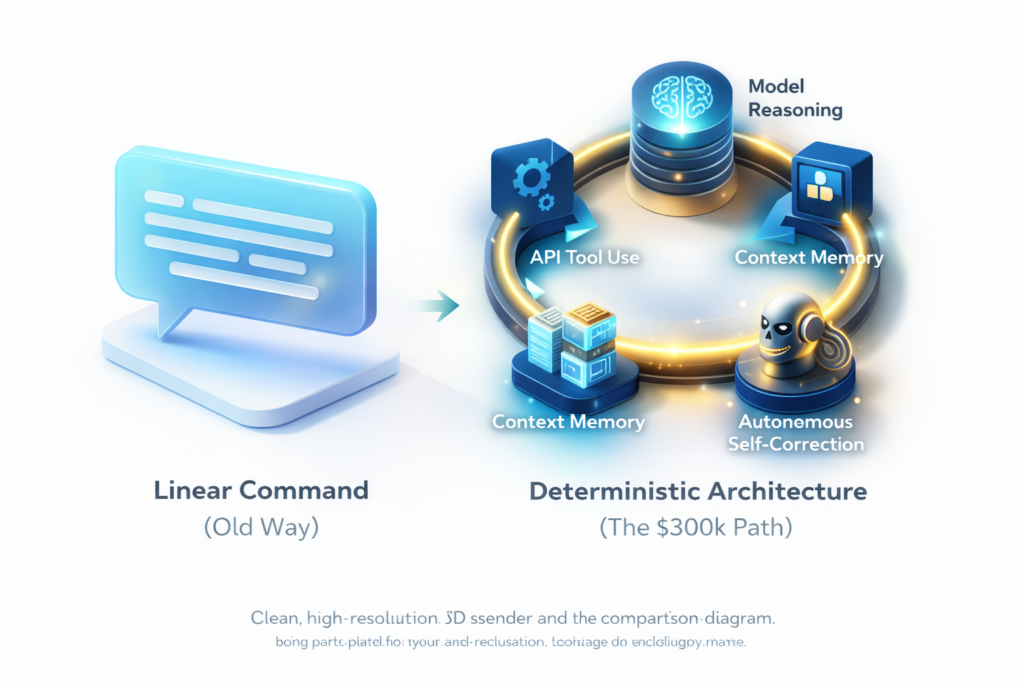
In 2024, prompt engineering was about syntax. In 2026, it is about architecture. High-paying roles have pivoted toward “System Prompt Design” and “Chain of Density” workflows. Companies aren’t paying you to talk to a chatbot; they are paying you to build a reliable, secure, and cost-effective inference pipeline that works every single time at scale.
2. Analyzing the 2026 Salary Landscape: Is the Big Money Still There?
The short answer: Yes, but with strings attached.
The standalone “Prompt Engineer” who just tweaks text in a browser is a rarity in 2026. The high-paying salaries—still reaching the $250k to $400k range—have shifted toward AI Integration Engineers and Cognitive Architects.
The “Market Value” today is determined by three specific capabilities:
- Deterministic Reliability: Can you write prompts that ensure the AI never hallucinates in a customer-facing financial app?
- Token Optimization: High-end prompt engineers are now judged by their ability to achieve a goal using the least amount of tokens possible, directly impacting a company’s bottom line in cloud costs.
- Programmatic Prompting: Using tools like DSPy or LangChain to “program” prompts rather than just writing them manually.
If you can demonstrate that your prompting architecture saved a firm $1M in compute costs while increasing output accuracy by 15%, you are arguably more valuable today than the “hype hires” of two years ago.
3. The Shift to “Agentic” Orchestration and Context Engineering
The biggest change in the Prompt Engineering 2024 curriculum versus today is the rise of AI Agents. We are no longer designing prompts for a single “turn” (one question, one answer). We are designing prompts for “Agentic Loops.”
Modern prompt engineers now focus on:
- Instruction Tuning for Agents: Writing the “Constitutions” or system prompts that define how an autonomous AI agent should act when it has access to a company’s tools (like a web browser, SQL database, or email client).
- Context Window Management: With context windows now reaching millions of tokens, the “Engineer” must decide exactly what data to “shove” into that window. This is “Context Engineering”—the art of knowing what a model needs to know to give a perfect answer.
- Semantic Router Design: Designing the logic that decides which model gets which prompt based on the complexity of the task.
4. Search Intent Answer: Is it still worth learning?
One of the most common questions on Google today is: “Is prompt engineering a waste of time?”
The answer is a resounding no, but with a caveat: learning just prompting is a mistake. In 2026, Prompt Engineering is a multiplier skill, not an isolated career.
Think of it like knowing how to use a search engine. In the year 2000, being a “professional web researcher” was a specialized job. By 2015, everyone had to be a good web researcher to do their job.
If you are a Developer, Marketer, or Lawyer, mastering prompt engineering in 2026 makes you 10x more efficient. If you want to be a specialist, you must move into Adversarial Prompting (AI Red Teaming)—one of the few dedicated roles that still commands massive premiums. Companies pay huge sums to engineers who can “break” their AI and find the vulnerabilities before the bad actors do.
5. The Future: From Prompting to “Intent Mapping”
As we look toward 2027 and beyond, the term “Prompt Engineering” will likely fade, replaced by “Intellectual Design” or “Intent Architecture.” We are moving away from telling the model what to do and toward defining who the model should be.
The practitioners who started with Prompt Engineering 2024 and stayed relevant have all moved toward deep domain expertise. They aren’t just experts in Claude or GPT; they are experts in Healthcare AI Implementation or Automated Legal Compliance.
Key Takeaways
- Stand-alone titles are fading: “Prompt Engineer” is being absorbed into existing software engineering and data roles.
- Salaries are stable for specialists: If you understand the technical “why” behind model performance, the high-paying opportunities ( $250k+) are still abundant.
- Architecture > Syntax: Mastery is no longer about finding “magic words,” but about building robust, multi-step agentic workflows.
- Cost Management is the new KPI: Great engineers save tokens. Efficient prompting is a direct profit center for modern tech companies.
- Security is a massive niche: AI Red Teaming (trying to force models to act maliciously to build better guardrails) is the highest-growth area in the prompting field.
Leave a Reply