website conversion rate optimization
Traffic but no sales? Learn why your conversion rate is low. We analyze intent mismatch, slow load speeds, and weak CTAs to fix your revenue leaks.
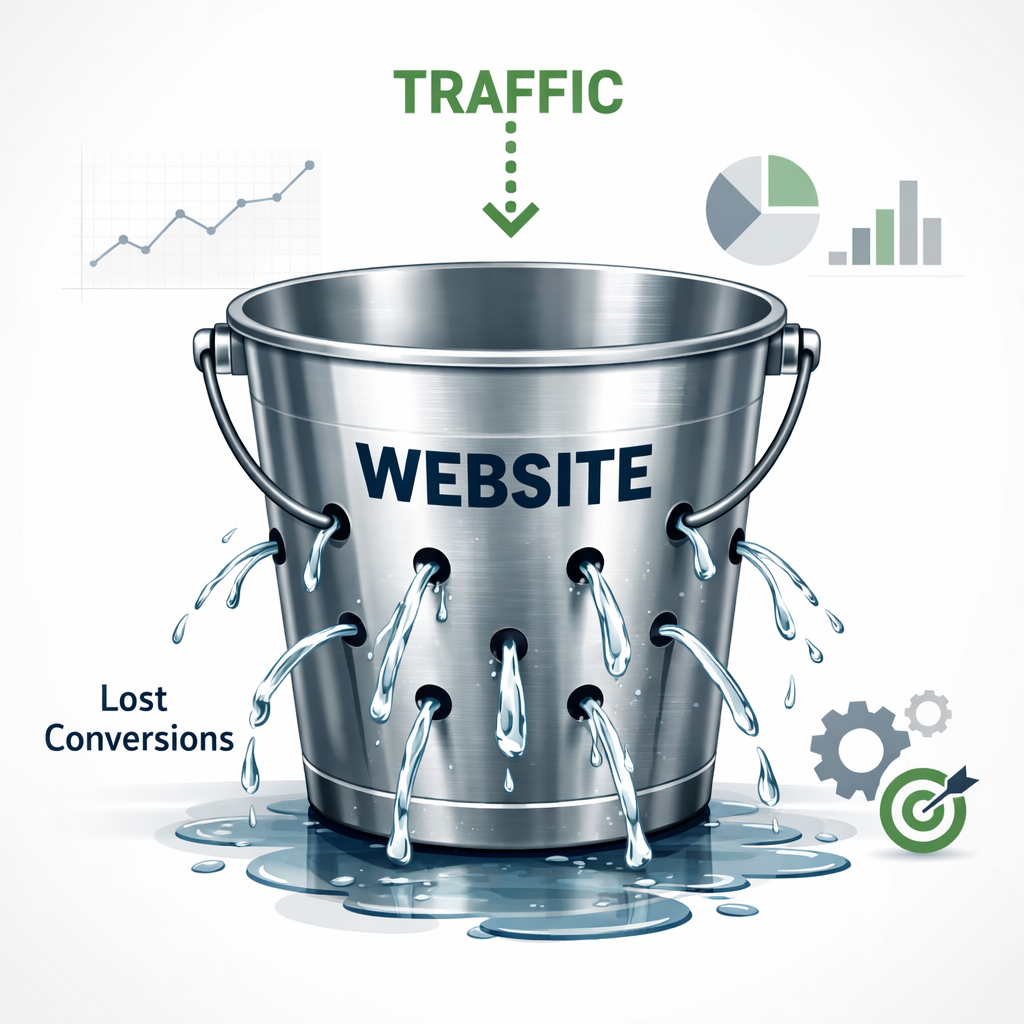
Seeing analytics numbers go up but revenue stay flat is frustrating. Many business owners assume they need more traffic, but traffic doesn’t fix a broken conversion system. It magnifies the problem. Think of traffic as water. Your website is the bucket. If the bucket has holes, adding more water only drains faster.
This is a conversion issue, not a traffic shortage. Effective website conversion rate optimization starts with identifying why users visit and leave without taking action. When the funnel leaks, leads evaporate, sales stall, and ad spend becomes wasteful.
The “Intent vs. Reality” Mismatch (Relevance)
Visitors click because they expect something specific. If the landing page content doesn’t match that expectation, the disconnect triggers an immediate exit. For example, an ad offering Custom App Development should not send users to a generic IT services homepage. The gap between promise and delivery destroys trust before the scroll.
A misaligned headline is one of the biggest causes of page abandonment. The brain seeks confirmation quickly. If it doesn’t see it within seconds, it rejects the page as irrelevant.
Actionable Fix:
Align your ad copy and headline.
If your ad states:
“Custom Shopify Store in 10 Days”
Your H1 should read:
Custom Shopify Store Delivered in 10 Days — Guaranteed
Relevance reduces cognitive load. Matching language reinforces intent. This simple alignment alone can improve landing page conversion without increasing traffic.
Friction: The Silent Killer (Speed & Mobile)
Friction destroys momentum. Slow loading, clunky navigation, and awkward mobile forms introduce resistance. Users bail quickly. A 3-second delay increases bounce rate by roughly 40%, and the longer it extends, the more catastrophic the fallout.
Core Web Vitals matter—especially for revenue pages. They aren’t just SEO metrics. They reflect user patience thresholds.
Mobile adds another layer. If a user must pinch-zoom to read text or struggle with a form that has tiny fields, conversion collapses. They abandon—not because they aren’t interested—but because the effort required feels unreasonable.
Actionable Fixes:
- Compress images and leverage lazy loading
- Eliminate intrusive pop-ups on mobile
- Make forms thumb-friendly with large fields and fewer required inputs
Reduce bounce rate by stripping friction, not adding more persuasive copy. Speed and comfort convert better than clever wording.
Your Call to Action (CTA) Is Confusing
A CTA is a decision point. Ambiguity increases hesitation. Buttons that read “Learn More” or “Submit” offer no clarity or value. They communicate effort without reward. Users refrain from clicking because they don’t know what happens next.
Another issue is clutter. Multiple CTAs scattered across a page compete for attention. Choice paralysis kicks in. Visitors freeze. When everything is important, nothing is.
Effective CTAs are:
- action-oriented
- expectation-setting
- benefit-driven
Compare:
- Submit vs Get Your Free Audit
- Learn More vs See Pricing & Timeline
Clarity isn’t optional. It’s psychological guidance. Limit one primary CTA per section. Position it where intent peaks—after value propositions, not before.
Lack of Social Proof (Trust Deficit)
Visitors don’t trust easily. They evaluate credibility rapidly, and absence of proof triggers skepticism. Without third-party validation, claims look self-serving. Social proof bridges doubt with reassurance.
Necessary trust signals include:
- real testimonials with full names
- case studies with quantifiable results
- recognizable partnership or client logos
- industry certifications
- media mentions
A testimonial saying “They were great to work with” is weak. One stating “Reduced our cost per lead by 34% in 90 days” is persuasive. Vagueness reads fabricated. Specificity reads authentic.
Place social proof near CTAs—not buried in footers. Users seek reassurance at decision moments, not after scrolling to the end.
Feature Bloat vs. Benefit Clarity
Businesses often brag about features, tools, frameworks, and internal processes. Users don’t care initially. They care about outcomes. Listing Next.js, React, Node, AWS means little to a CFO whose priority is speed, uptime, and revenue.
Features speak to you.
Benefits speak to the customer.
Examples:
We use Next.js → Your site loads instantly and keeps visitors engaged
We provide 256-bit SSL → Your customers feel safe entering payment details
Benefits anchor value. Features support credibility. In that order.
Remove jargon from top-level messaging. Engineers care about stack details. Decision-makers care about impact. When benefits lead, conversion follows.
The Real Reason Traffic Doesn’t Fix This
Traffic amplifies your site’s strengths or weaknesses. If the page leaks leads due to misalignment, friction, confusion, or mistrust:
- More traffic = more leaks
- More ad spend = more waste
- More users = more abandonment
Imagine pouring more water into a bucket riddled with holes. Marketers tell you to increase the flow. Strategists tell you to fix the leaks first.
A workshop analogy:
You can bring 1,000 customers into a store—but if shelves are unorganized and the cashier line is slow, sales are limited. The problem isn’t footfall. It’s friction.
Conversion optimization turns existing traffic into revenue without increasing cost. It transforms marketing from expense to investment.
CRO Fixes Deliver the Highest ROI
Conversion improvements outperform traffic increases in efficiency and cost.
Examples of high-impact adjustments:
- rewriting headlines for intent alignment
- compressing media to reduce load time
- simplifying CTAs and reducing choice overload
- placing social proof near decision triggers
- converting features to benefit language
- shortening forms
- applying mobile-first layouts
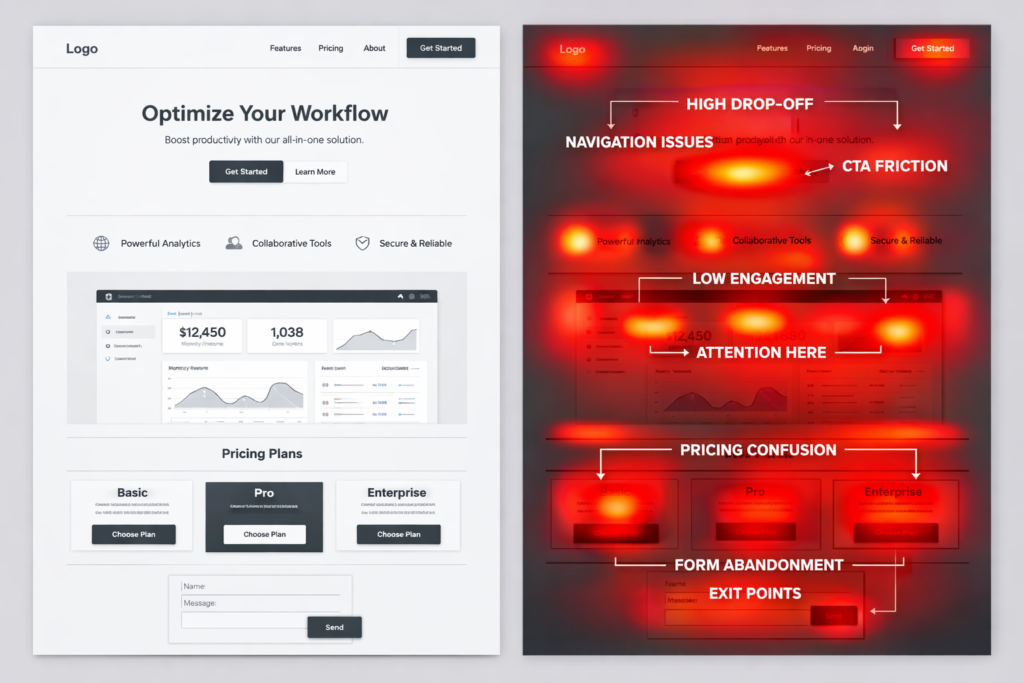
- using heatmaps to detect friction
These actions repair leaks before scaling. Website conversion rate optimization ensures ad spend translates into leads, not bounces. It rescues wasted budget and increases lifetime value.
Summary & Soft Pitch
Traffic without conversion is noise—vanity metrics masking revenue inefficiency. Fixing conversion yields more return than buying more clicks. When the bucket stops leaking, every dollar spent fills it rather than draining out.
Stop assuming traffic is the cure. Diagnose leaks. Patch friction. Align intent. Present value clearly. Build trust. Then scale.
Stop guessing. Contact Code Nest for a UX/UI Audit today.
Image Prompts for This Blog
- “A leaky bucket metaphor: website represented as a bucket with holes leaking water labeled traffic, professional business tone, conversion optimization concept, detailed, analytical visual style.”
- “Split screen heatmap analysis on a landing page showing red hot zones of friction and user drop-offs, corporate UI/UX audit theme, clean and clinical design.”
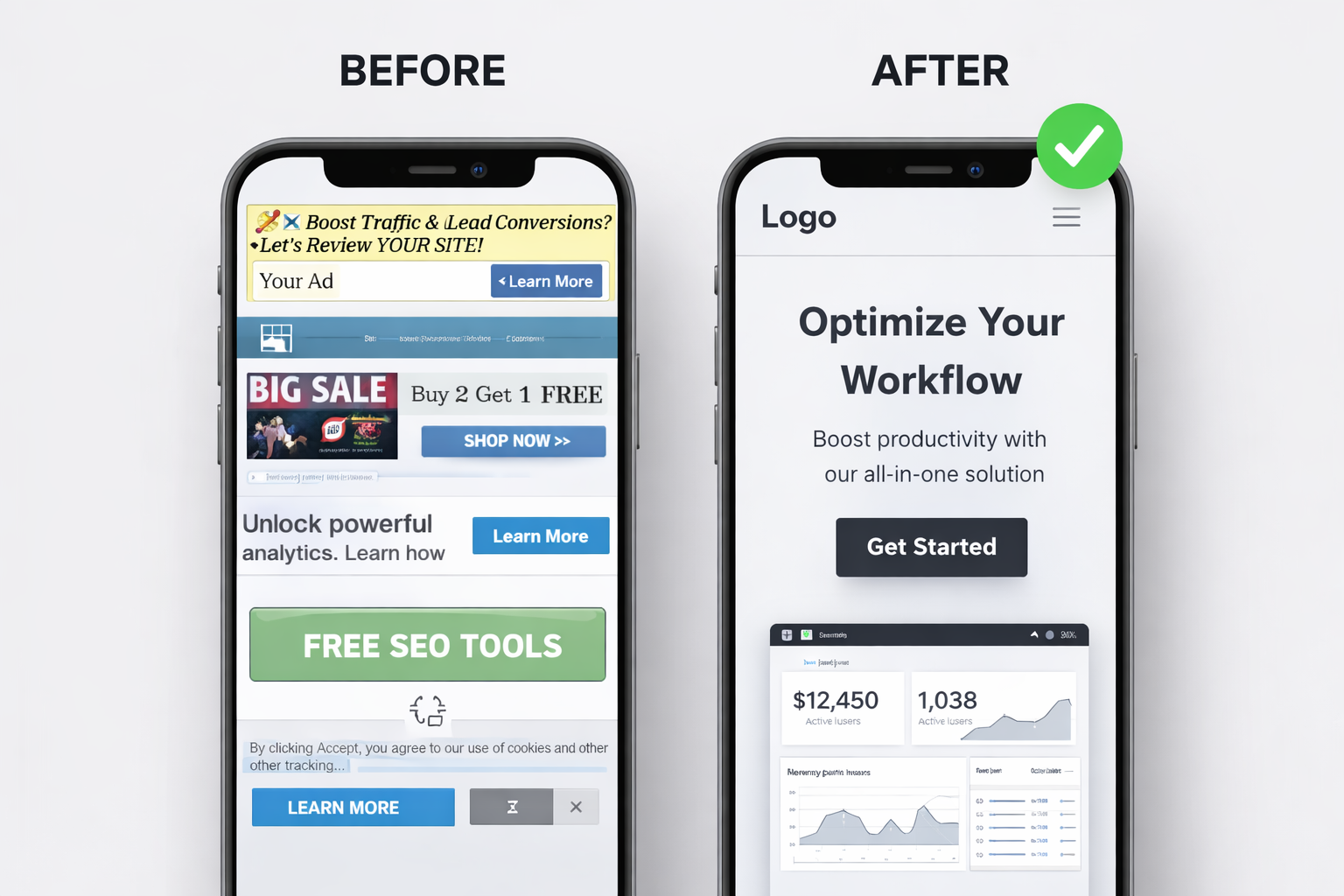
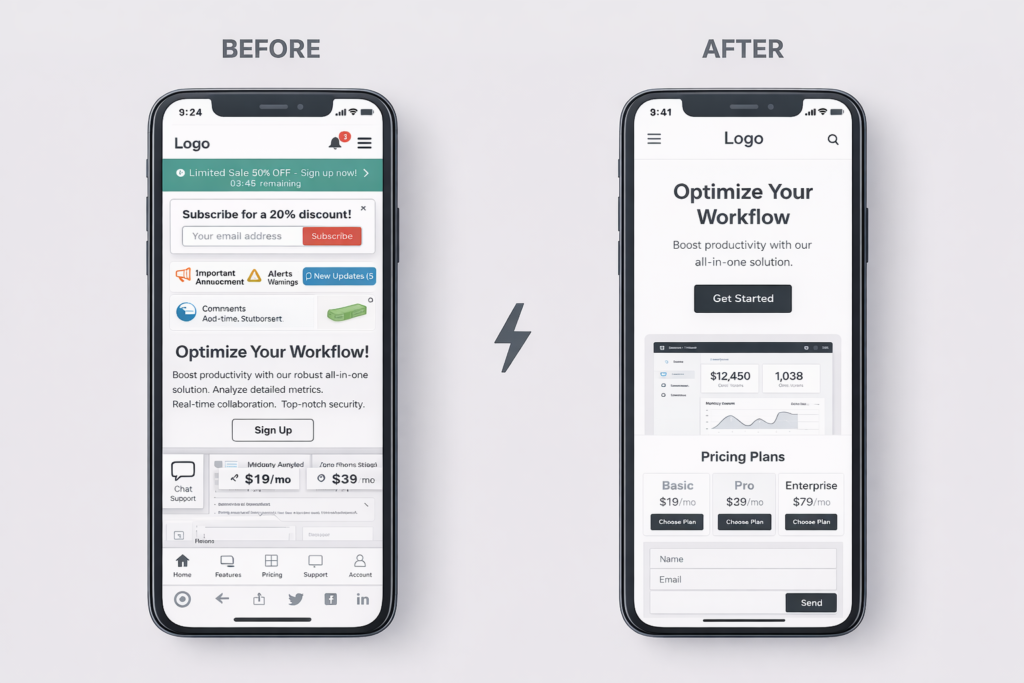
- “Before and after website comparison: slow cluttered mobile site vs clean fast optimized version, CRO-focused, business aesthetic, minimalistic and high detail.”
Leave a Reply