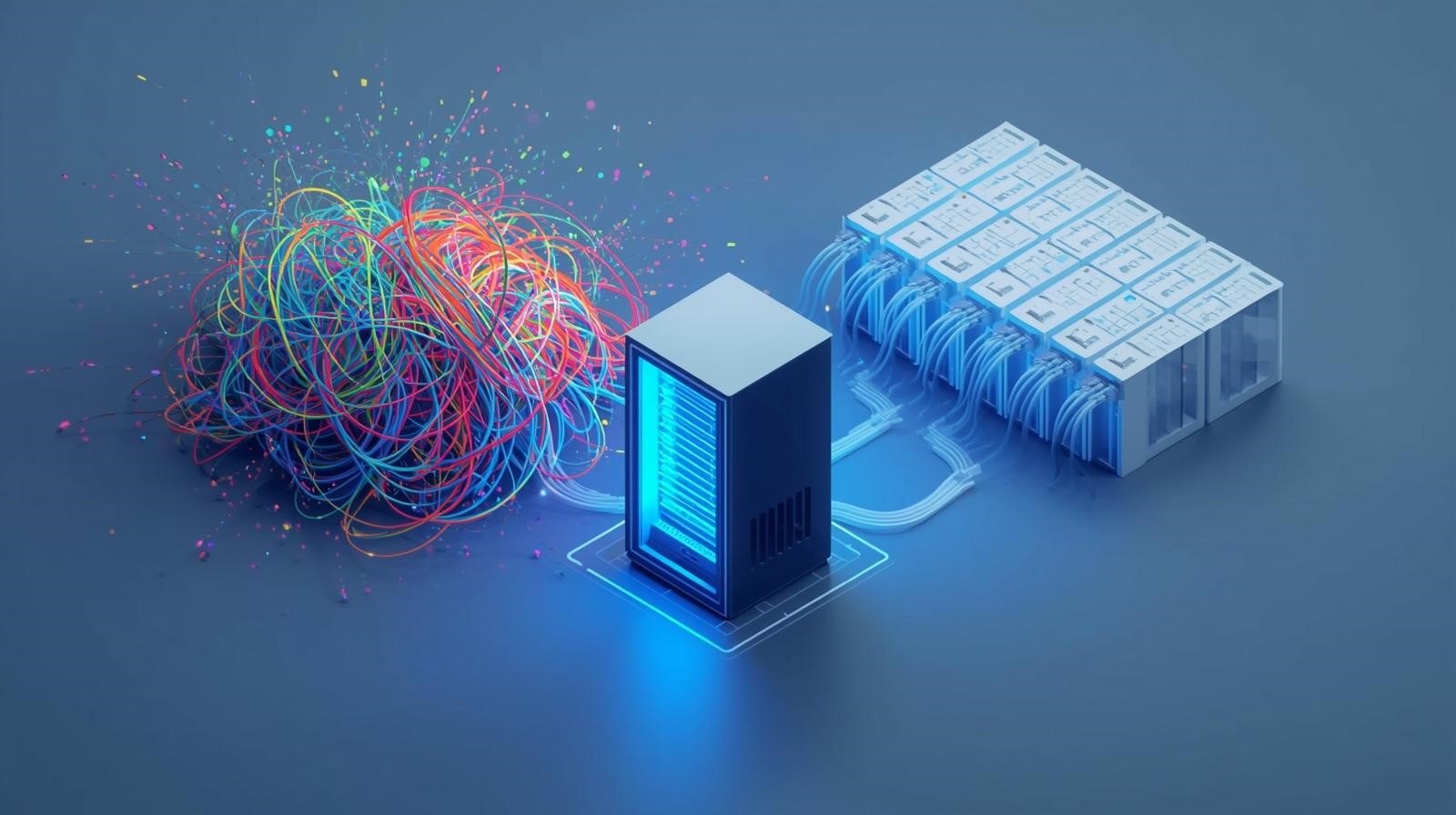
When a business owner looks at a new website or a custom software application, they see the user interface, the load speed, and the functionality. To the untrained eye, if the button works and the layout looks professional, the project is a success. However, beneath the surface of every digital product lies a complex architecture of source code.
If that code is “dirty”—disorganized, redundant, or overly complex—it acts like structural rot in a house. You might not see it for the first year, but eventually, the walls begin to crack. At Code Nest, we frequently inherit projects from “budget” developers where the surface looks fine, but the codebase is so tangled that making a simple change, like updating a price or adding a new service, takes ten times longer than it should.
The importance of clean code standards is not a matter of aesthetic preference for developers; it is a critical variable in your company’s long-term profitability and agility. Clean code is what allows a business to scale without the weight of its own past mistakes holding it back.
What is Clean Code, Exactly?
In simple business terms, clean code is code that is written for people to read, not just for machines to execute.
Computers don’t care if a program is messy. A machine will run a “spaghetti” script just as happily as it runs an elegantly architected one. The problem arises when a human—either your current developer or a new one you hire later—needs to update that script.
Clean code is modular, self-explanatory, and consistent. It follows established importance of clean code standards such as DRY (Don’t Repeat Yourself) and SOLID principles. When your codebase is clean, it is “self-documenting.” A new engineer can join your team, look at the project, and understand how the system works within hours, rather than weeks of confusion.
1. Avoiding the High Cost of Technical Debt
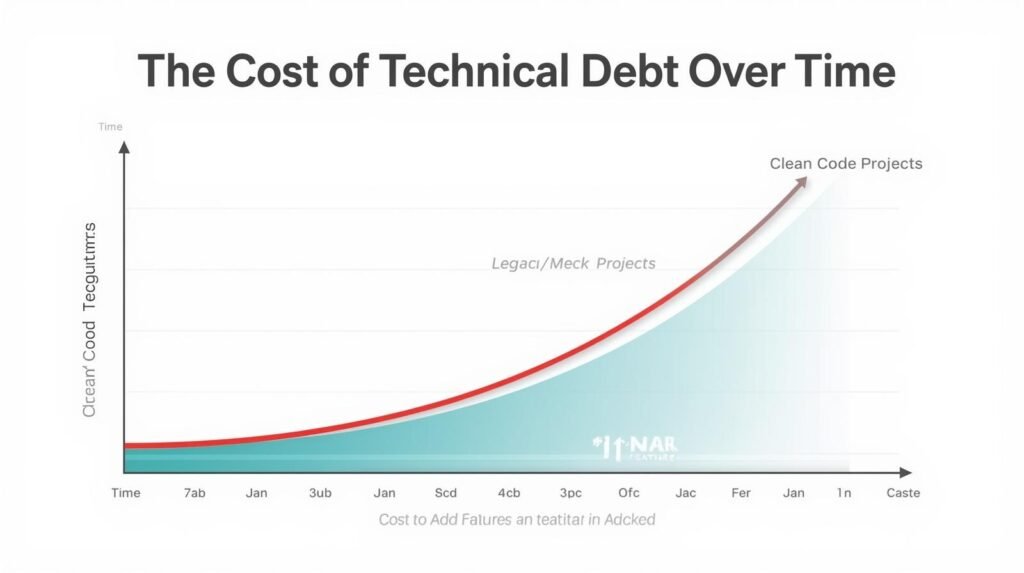
The most significant financial reason to prioritize clean code is to avoid “Technical Debt.” In software development, technical debt is a metaphor for the extra work that arises when you choose an easy (messy) solution now instead of a better approach that takes slightly longer.
Like financial debt, technical debt isn’t always bad in small doses (such as when building an MVP), but it carries high “interest.”
- The Debt: Taking a shortcut to launch two weeks earlier.
- The Interest: Every future feature now takes longer because developers have to work around the messy “shrotcut” code you wrote at the start.
If a project is built without clean code standards, the “interest” eventually becomes so high that your developers spend 80% of their time fixing old bugs and only 20% building new features. For a growing business, this is a death sentence for innovation. Clean code allows you to pay your debt early, keeping your ongoing maintenance costs low and predictable.
2. Ensuring Scalability and Performance (React & Next.js)
For businesses using modern stacks like React or Next.js, clean code is the backbone of performance. React is a component-based library. If those components are built haphazardly, you end up with “Component Bloat.”
In a messy React codebase:
- Redundant data is fetched multiple times, slowing down the site.
- The “State Management” becomes unpredictable, leading to hard-to-track UI bugs.
- Next.js optimizations, like Server-Side Rendering (SSR), can be easily broken by poor architectural choices.
When we build with scalable Next.js architecture at Code Nest, we focus on modularity. We break down complex interfaces into small, reusable building blocks. This not only makes the site faster for your users but makes it incredibly easy to expand. If you need a new dashboard section, we can reuse existing components like Lego blocks, significantly reducing the billable hours required for future growth.
3. Faster Onboarding and Team Continuity
One of the greatest risks to a startup or a growing business is “Knowledge Siloing.” This happens when one specific developer writes code that only they understand. If that developer leaves the company or moves to a different project, they take the key to your software with them.
If the code doesn’t follow standard industry patterns, a new developer might suggest that it is “impossible” to work with and recommend a total rewrite from scratch—a nightmare scenario for your budget.
By insisting on the importance of clean code standards, you ensure that your software is a transferable business asset. Any qualified developer should be able to step in and continue the work without a massive learning curve. This provides your business with “Vendor Independence” and ensures that your technology survives even if your team changes.
4. Stability Under Pressure
When your traffic spikes or your database grows, clean code keeps the system stable. Messy code often contains hidden bottlenecks—loops that run too many times, variables that aren’t properly cleared from memory, or insecure API calls.
Under heavy load, these small mistakes are magnified. A “dirty” codebase is far more likely to experience a total system collapse during a major sales event or a high-traffic marketing campaign. Clean code follows a logical, optimized flow, making it resilient to the stressors of a growing user base.
5. Better Security and Fewer Vulnerabilities
There is a strong correlation between “ugly” code and insecure code. Hackers love complexity. The more “clever” and non-standard a developer’s code is, the easier it is for a vulnerability to hide in plain sight.
Clean code emphasizes transparency and simplicity. When logic is easy to follow, it is easy to audit for security flaws. Standardized coding patterns also usually include “Sanitization”—the process of ensuring that user input doesn’t contain malicious scripts. When your development team skips the “cleanup” phase of a project, they are often skipping the final security checks as well.
Conclusion: Quality is the Shortest Path to Success

It is a paradox of development: writing clean code takes more time in the beginning, but it makes the project move faster overall.
Think of clean code as a high-quality, organized filing system. It takes longer to label every folder correctly than to just throw every paper into a cardboard box. However, when you need to find one specific document three years later, the filing system is the only thing that saves you from hours of frustration.
At Code Nest, we pride ourselves on what’s under the hood. Our commitment to importance of clean code standards means that we deliver software that doesn’t just work today—it continues to serve your business five years from now.
Does your current codebase feel like an anchor holding your business back? Contact Code Nest today. We specialize in code audits, legacy system modernization, and building high-performance, clean-architecture React and Next.js applications that are built to last.
Leave a Reply